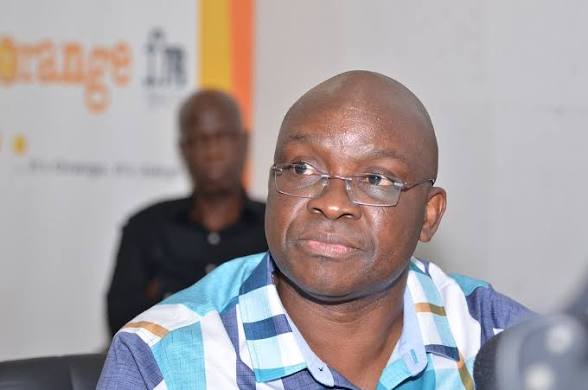
Former Ekiti State Governor and newly inaugurated Chairman of the Rural Electrification Agency, Ayodele Fayose, has stirred reactions across Nigeria after linking the country’s poor electricity supply to its rapidly growing population.
Fayose made the comment while speaking about the challenges of electricity access in rural communities, arguing that the consequences of inadequate power supply go far beyond darkness in homes and businesses.
According to the former governor, poor electricity supply leaves many Nigerians with limited options after nightfall. He explained that when electricity is unavailable and darkness sets in early, particularly in rural communities, many people are forced to remain indoors rather than engage in other forms of entertainment or social activities...READ THE FULL ARTICLE HERE .
Fayose used a humorous explanation to illustrate his point, saying that when there is no electricity and it becomes dark around 7pm, people tend to stay at home and spend more time with their spouses, which he jokingly connected to population growth.
He suggested that improving electricity supply would change the pattern by creating opportunities for nightlife, recreation and other social activities outside the home. In his view, reliable power could therefore have social consequences that extend beyond economic development and household convenience.
The statement has attracted considerable attention because of the unusual way Fayose presented the relationship between electricity and population growth. However, his broader argument focused on the need to address Nigeria’s persistent electricity challenges, particularly in rural areas where access to reliable power remains a major concern.
Fayose’s new position as Chairman of the Rural Electrification Agency places him at the centre of efforts to improve electricity access in underserved communities. His comments therefore come at a time when the Federal Government is facing continued pressure to expand electricity infrastructure and provide more reliable power to Nigerians.
For millions of Nigerians, unreliable electricity affects virtually every aspect of daily life. Small businesses often depend on generators and alternative energy sources, while households face additional expenses when they have to provide their own electricity. Poor power supply can also affect education, healthcare, communication, manufacturing and other economic activities.
The electricity challenge is particularly significant in rural communities, where the absence of reliable power can limit economic opportunities and make it difficult for businesses and essential services to operate effectively. Expanding access to electricity has consequently remained an important part of Nigeria’s development agenda.
Fayose’s comments also highlight the wider social impact of energy poverty. When communities lack electricity, productive activities can be restricted after sunset, businesses may close earlier and residents have fewer opportunities for recreation and social interaction.
Research has previously linked inadequate electricity supply in Nigeria to broader economic and social challenges, including reduced industrial productivity, business closures and declining access to essential services.
The former Ekiti governor’s remarks have consequently generated both amusement and serious discussion among Nigerians. While his explanation about population growth was delivered in a lighthearted manner, it has drawn attention to a problem that has remained a major concern for successive Nigerian governments.
As Fayose begins his tenure at the Rural Electrification Agency, expectations will be high for concrete measures that can improve electricity access across rural communities. Nigerians will be watching to see whether the agency can translate its mandate into better power supply and greater opportunities for communities that have remained underserved.
Ultimately, Fayose’s unusual argument has succeeded in drawing attention to a serious national issue. Beyond the humour surrounding his statement, the central message remains clear: reliable electricity is essential not only for powering homes and businesses but also for improving productivity, expanding economic opportunities and transforming the quality of life for Nigerians.