The political atmosphere ahead of Nigeria’s 2027 general election has taken another turn after former Anambra State Governor Peter Obi and former Kano State Governor Rabiu Kwankwaso came to the defence of Catholic Archbishop Emeritus of Abuja, Cardinal John Onaiyekan, and other Catholic bishops following criticism from the Presidency.
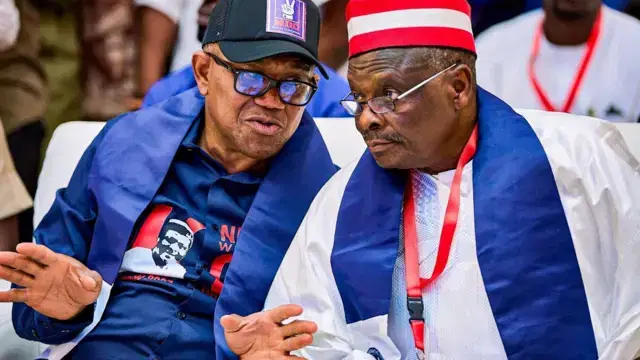
The two opposition figures, who are prominent members of the emerging political alliance seeking to challenge President Bola Tinubu in 2027, said the Catholic leaders were exercising their responsibility to speak truth to power and should not be attacked for expressing concerns about the state of the nation.
The controversy followed remarks made by Cardinal Onaiyekan after a meeting between President Tinubu and Catholic bishops at the Presidential Villa in Abuja. Onaiyekan reportedly spoke about issues discussed during the meeting and raised concerns about the country’s political, economic and security situation...READ THE FULL ARTICLE HERE .
His comments subsequently attracted a response from the Presidency, which appeared to question the manner in which the outcome of the closed door meeting was presented to the public. The reaction generated criticism from several political and civil society actors who argued that religious leaders should be free to offer constructive criticism of government policies.
Peter Obi, in his reaction, condemned what he regarded as an inappropriate response to the Catholic bishops and urged the Tinubu administration to see criticism as an opportunity to improve governance rather than as an attack.
Obi maintained that religious leaders have an important role to play in society, particularly when they speak about issues affecting ordinary Nigerians. According to him, government should be willing to listen to voices of concern and address legitimate issues rather than attempting to silence or discredit those raising them.
Kwankwaso also backed the Catholic bishops, arguing that their intervention should be viewed within the broader responsibility of religious institutions to speak on matters affecting the country. The former Kano governor’s position further strengthened the political dimension of the controversy, coming at a time when opposition politicians are increasingly positioning themselves ahead of the 2027 election.
The development has added another layer to the growing political debate between supporters of the Tinubu administration and opposition figures. With the 2027 election drawing closer, issues surrounding insecurity, the economy, governance, religious freedom and the welfare of Nigerians are expected to remain central to political campaigns and public discussions.
The disagreement also highlights the delicate relationship between political authorities and influential religious institutions in Nigeria. The Catholic Church has historically participated in national conversations on governance, democracy, human rights and social justice, while Catholic bishops have frequently used their platforms to comment on policies they believe affect Nigerians.
For Obi and Kwankwaso, defending Onaiyekan and the Catholic bishops provides an opportunity to emphasise their argument that democratic governance requires room for criticism and dissent. Their position is that those in authority should be prepared to hear uncomfortable opinions, particularly when such opinions concern issues affecting millions of citizens.
The controversy comes at a particularly significant time because Obi and Kwankwaso are now operating within the same broader political arrangement ahead of 2027. Their decision to jointly defend the bishops could therefore further strengthen the opposition narrative that the next presidential election will be a contest not only between political parties but also between competing visions of governance.
The Presidency and its supporters, however, have maintained a different position, arguing that the administration has remained committed to engaging religious leaders and promoting unity. Some government supporters have also rejected suggestions that President Tinubu’s administration has disrespected the Catholic Church, insisting that the President has maintained cordial relations with Christian leaders and other faith groups.
The disagreement has consequently developed beyond the original comments by Cardinal Onaiyekan, becoming part of a larger national conversation about whether government should welcome criticism from religious leaders, civil society organisations, opposition politicians and other influential voices.
As Nigeria moves closer to the 2027 election, such confrontations are likely to become more frequent as political parties and their candidates attempt to shape public opinion. For the opposition, the controversy offers another opportunity to highlight concerns about the direction of the country under the current administration. For the government, it presents a challenge to demonstrate that criticism can be accommodated without undermining its authority or policy agenda.
At the centre of the debate remains a fundamental question about the role of religious leaders in a democracy. While they may not hold political office, their influence gives them a significant platform to comment on matters of national importance. Obi and Kwankwaso believe that such voices should be respected, particularly when they draw attention to challenges facing ordinary Nigerians.
The unfolding dispute between the Presidency and the Catholic leadership is therefore unlikely to disappear quickly. With the 2027 presidential contest already beginning to shape political alliances and public discourse, the positions taken by major political figures such as Obi and Kwankwaso could further influence how voters interpret the relationship between government, religious institutions and the wider Nigerian public.