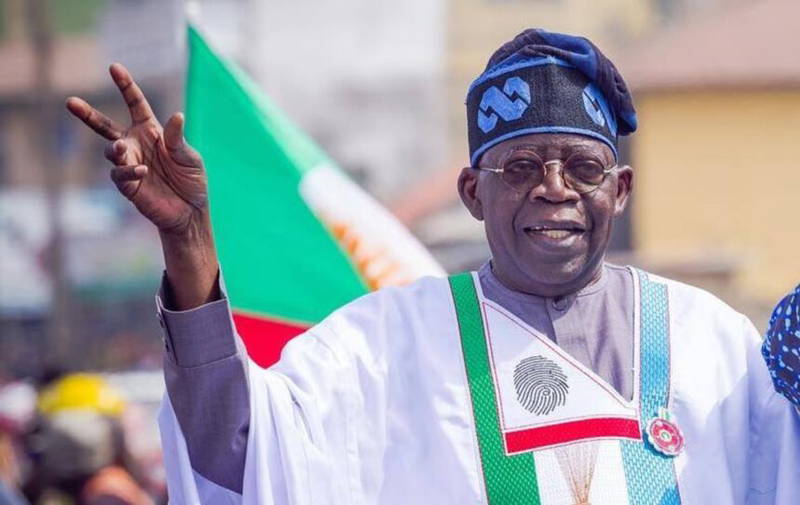
President Bola Tinubu’s directive to the Economic and Financial Crimes Commission to return to court and vacate the order restricting access to the Osun State Government’s accounts has sparked a fresh national debate over the independence of Nigeria’s anti corruption agencies and the limits of presidential intervention.
The development followed the EFCC’s decision to secure a court order restricting withdrawals from an Osun State Government statutory allocation account as part of an investigation into the alleged handling of about N11 billion in Ecology Funds, Intervention Funds and allocations from the Federation Account Allocation Committee.
However, the timing of the EFCC’s action became a major source of controversy because it came only days before the August 15 governorship election in Osun State. President Tinubu subsequently directed the commission to immediately return to court and seek the lifting of the restriction...READ THE FULL ARTICLE HERE .
The President acknowledged that the EFCC acted within its statutory powers but expressed concern about the timing of the action. He said the development was inappropriate given its proximity to the election and noted that actions taken by federal agencies are often associated directly with the Presidency.
Tinubu’s intervention has since generated reactions from political actors, lawyers and civil society groups, with critics questioning whether the President’s directive could undermine the operational independence of the EFCC.
Among those raising concerns is the African Democratic Congress, alongside its presidential candidate, Atiku Abubakar, and a Senior Advocate of Nigeria. They have questioned the implications of the President’s intervention for the rule of law and the independence of institutions established to investigate financial crimes.
The controversy centres on a fundamental question about the relationship between the Presidency and anti corruption institutions. While the EFCC operates within the broader framework of the Federal Government, concerns have persisted over whether its investigations can be conducted without political influence, particularly when cases involve politically exposed persons or state governments.
Supporters of the EFCC’s original action, however, argue that the agency should not be prevented from investigating suspicious financial activities simply because an election is approaching. The Civil Society Legislative Advocacy Centre and Transparency International Nigeria have defended the restriction of the Osun accounts, arguing that protecting public funds should take priority whenever there are credible concerns about possible diversion or misuse.
The groups maintained that public funds belong to the people and should therefore be protected irrespective of the political circumstances surrounding an investigation. Their position has added another layer to the debate, with the controversy now involving not only questions of political timing but also the broader responsibility of anti graft institutions to safeguard public resources.
The EFCC’s investigation reportedly centres on allegations involving billions of naira in public funds. The agency’s decision to seek a court order was therefore presented as part of its statutory responsibility to investigate suspected financial crimes. The subsequent presidential directive has, however, shifted attention towards whether executive intervention could affect the commission’s ability to independently carry out such investigations.
The timing of the entire episode has also made the matter particularly sensitive because Osun was preparing for a major governorship election. With political parties already engaged in intense campaigning, any federal action involving the finances of the state government was bound to attract political interpretations.
President Tinubu’s explanation that he was concerned about the timing rather than the EFCC’s statutory authority has become central to the debate. The President did not suggest that the agency lacked the power to investigate the matter, but argued that the circumstances surrounding the restriction created an appearance that could undermine confidence in the electoral process.
The controversy has therefore placed the Federal Government, the EFCC and political stakeholders under renewed scrutiny. For many Nigerians, the issue is bigger than the Osun accounts because it touches on the ability of institutions such as the EFCC to operate independently, particularly when their investigations have political implications.
As the debate continues, attention is expected to remain focused on what happens to the underlying investigation into the alleged N11 billion financial transactions. The lifting of the account restriction, if completed through the courts, would not necessarily bring the investigation itself to an end.
The development has ultimately reopened a long standing national conversation about institutional independence, executive authority and the fight against corruption in Nigeria. While government agencies must be allowed to investigate suspected financial misconduct, Nigerians also expect such investigations to be conducted transparently and without political manipulation.
The Osun controversy may therefore become an important test of how Nigeria balances the fight against corruption with the need to protect democratic institutions, electoral credibility and the independence of agencies created to enforce financial accountability.