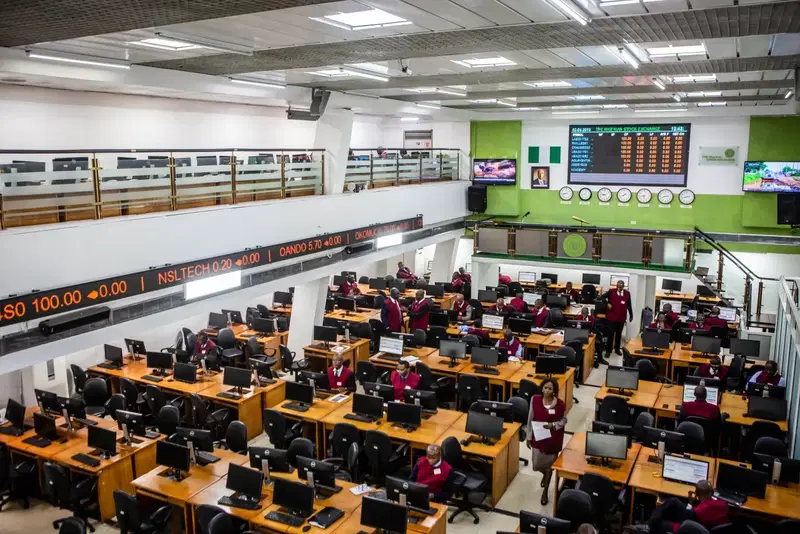
Concerns are growing over the financial position of several companies listed on the Nigerian Exchange as new figures show that 22 firms have more debt than cash, raising questions about their ability to sustain operations, investment and employment.
Data covering 40 listed companies for the second quarter of 2026 showed that the firms had combined debts of about ₦3.9 trillion.
While 18 companies had enough cash to cover their total debt obligations based on their cash-to-debt ratios, 22 others recorded ratios below 1.0, meaning their outstanding debt was higher than the cash available to them. (Vanguard News)..READ THE FULL ARTICLE HERE .
The figures have triggered concerns about the possible impact of financial pressure on production, investment and jobs, particularly if companies with weaker liquidity positions struggle to meet their obligations.
The cash-to-debt ratio is one measure used to assess how much cash a company has relative to its total debt. A ratio above 1.0 indicates that a company has more cash than debt, while a figure below 1.0 means its debt exceeds its available cash.
Among the companies with the strongest cash coverage were HBM Nigeria, UPDC Real Estate Investment Trust, eTranzact International and CWG.
HBM Nigeria recorded the highest ratio at 319.07 times, based on cash of about ₦393.68 billion against debt of approximately ₦1.23 billion.
At the other end of the table, some companies had significantly lower cash coverage. Aradel Holdings recorded a ratio of 0.96 times, with about ₦1.77 trillion in cash against ₦1.84 trillion in debt.
Other companies with ratios below 1.0 included Ellah Lakes, John Holt, Academy Press, Eterna, ABC Transport, Cadbury Nigeria, Fidson, BUA Cement, BUA Foods, Beta Glass, Conoil, Guinness Nigeria, Champion Breweries, DAAR Communications, Cutix and Japaul Gold & Ventures.
The figures do not automatically mean that the affected companies are facing collapse or that workers will immediately lose their jobs. Financial analysts noted that the cash-to-debt ratio is only one component of a broader assessment of a company’s financial health.
Factors such as revenue, profitability, cash flow, assets, access to financing and the structure and maturity of outstanding loans also need to be considered when assessing the ability of a company to service its obligations.
However, prolonged financial pressure can affect the ability of businesses to expand production, invest in new projects, maintain their workforce and meet other operational commitments.
For Nigeria’s economy, the financial health of major companies remains important because businesses contribute to employment, production, tax revenue, investment and activity in the capital market.
The latest figures therefore highlight the importance of closely monitoring corporate debt levels and liquidity, particularly as companies navigate operating costs, financing obligations and broader economic pressures.
Investors and other stakeholders are expected to look beyond headline debt figures and examine individual companies’ financial statements and cash flows before drawing conclusions about their ability to remain financially stable.