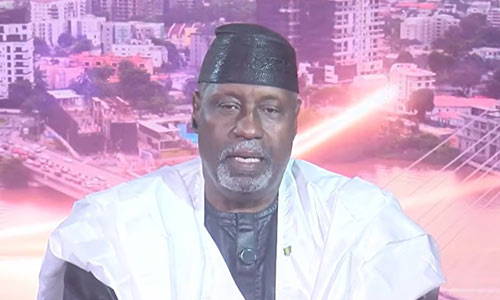
Former House of Representatives Minority Leader, Farouk Aliyu, has claimed that he was offered N250 million in an attempt to secure his support for former President Olusegun Obasanjo’s controversial third term agenda in 2006.
Aliyu made the allegation while recounting his experience as a federal lawmaker during the heated constitutional amendment debate that could have paved the way for Obasanjo to seek another term in office.
According to the former lawmaker, he was contacted by the then Chairman of the Economic and Financial Crimes Commission, Nuhu Ribadu, who asked him to travel to Abuja for a meeting with Obasanjo. Aliyu said he initially declined but later agreed after Ribadu appealed to him on the basis of their friendship...READ THE FULL ARTICLE HERE .
He claimed that after arriving in Abuja, he met an unnamed individual who offered him N250 million to support the proposed constitutional amendment. Aliyu said he rejected the alleged financial inducement and subsequently made his opposition to the third term proposal clear.
The former lawmaker further alleged that other senior lawmakers were also offered large sums of money in an effort to secure support for the proposal. He claimed that the then Speaker of the House of Representatives, Masari, was offered N500 million, while former Majority Leader Abdul Ningi was allegedly offered N400 million. These claims remain allegations made by Aliyu and have not been independently established in the report.
Aliyu said the proposed third term arrangement was a genuine political project at the time and maintained that he ultimately refused to support it.
The controversy surrounding Obasanjo’s alleged third term bid dates back to the final years of his presidency, when lawmakers considered constitutional amendments that included provisions that could have extended the tenure of the president and other elected officials.
The proposed amendments were eventually rejected by the National Assembly in May 2006, bringing the attempt to alter the constitutional term limits to an end. Obasanjo left office in 2007 after completing two terms as president.
Obasanjo has previously rejected claims that he personally told anyone that he wanted to remain in office for a third term. In 2025, the former president again disputed the longstanding allegations surrounding the issue.
Aliyu’s latest account has therefore reopened discussion about one of the most controversial political episodes of Nigeria’s Fourth Republic, particularly the efforts reportedly made at the time to win lawmakers’ support for constitutional changes.
The allegations have not been established as fact by a court or independent investigation, and the individuals mentioned in Aliyu’s account may have their own responses to the claims.