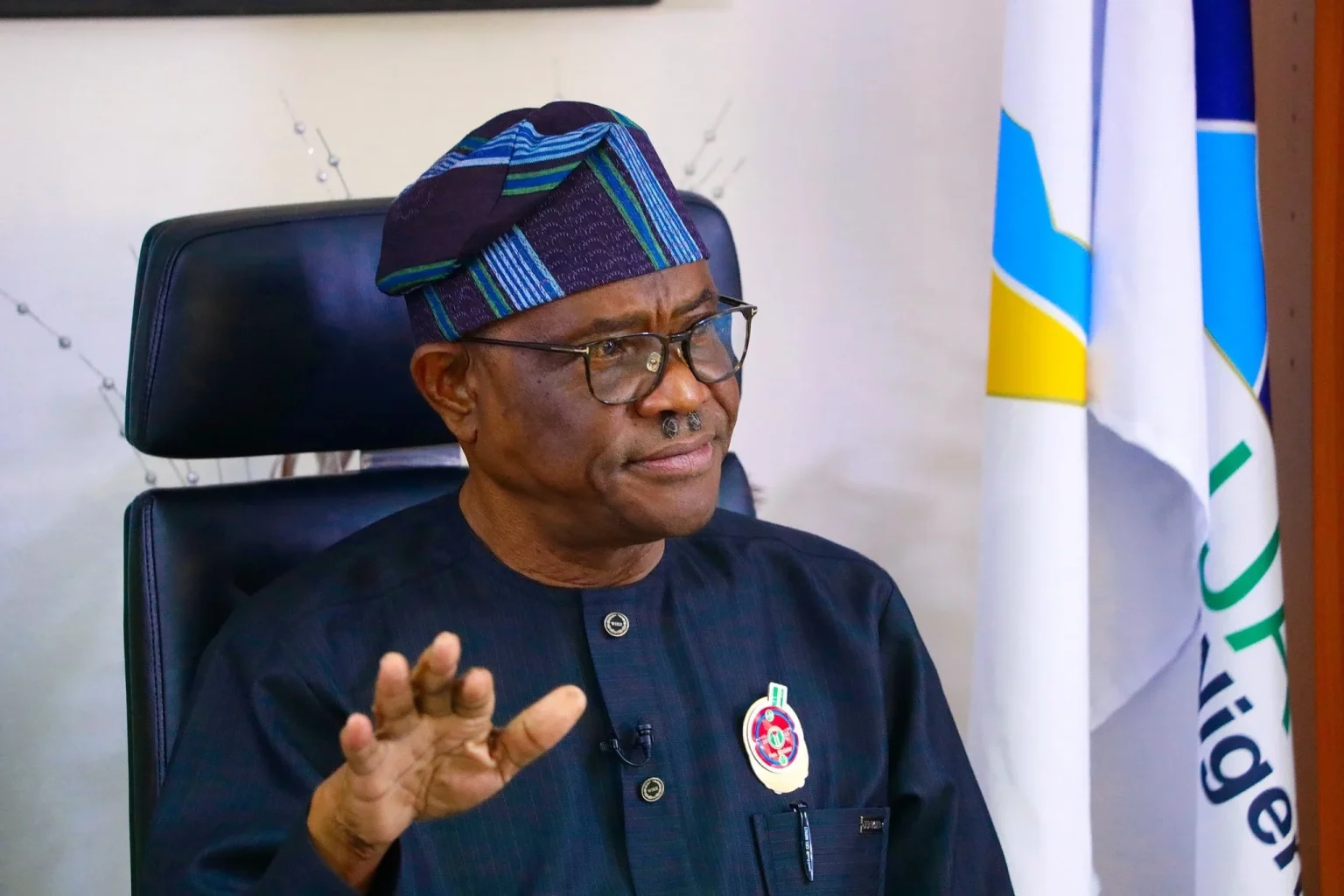
A fresh political disagreement has emerged ahead of Nigeria’s 2027 general elections as Minister of the Federal Capital Territory, Nyesom Wike, and governors elected on the platform of the All Progressives Congress clash over the growing influence of the Rainbow Coalition.
The dispute centres on how political support for President Bola Tinubu’s re-election should be organised, with Wike maintaining that politicians can support the President while remaining free to back candidates from other parties in governorship and legislative elections.
Wike has continued to promote the Rainbow Coalition as a broad political platform involving actors from different political backgrounds who support Tinubu’s return to office in 2027. However, APC governors have rejected any arrangement they believe could weaken the party or its candidates during the elections...READ THE FULL ARTICLE HERE .
The Chairman of the Progressive Governors’ Forum and Imo State Governor, Hope Uzodimma, said APC governors would remain committed to candidates officially sponsored by the ruling party.
He stated that the governors would not participate in or support any political alliance capable of undermining Tinubu’s re-election, weakening the APC or working against candidates contesting under the party’s platform.
The position has created a clear difference between the APC governors’ approach and Wike’s strategy. While the minister insists that his support for Tinubu remains firm, he has also made it clear that the Rainbow Coalition is separate from the APC.
According to Wike, supporting Tinubu at the presidential level does not mean that members of the coalition must support APC candidates in every other election.
He has argued that political actors should be allowed to maintain their individual affiliations and support candidates of their choice at the state and legislative levels while working together around the presidential election.
The disagreement is particularly significant because the 2027 elections will involve contests for several political positions, meaning that alliances formed around the presidential race could have consequences for governorship and legislative contests across the country.
The APC governors are concerned about maintaining the party’s political structure and ensuring that candidates contesting under its platform receive the support required to win their respective elections.
Wike, on the other hand, appears focused on creating a wider political network that extends beyond the formal structures of a single party.
The Rainbow Coalition has attracted political figures from different camps, with its supporters presenting it as a platform capable of mobilising voters and political structures for Tinubu while allowing participating politicians to retain their separate political identities.
The development has also drawn reactions from the Peoples Democratic Party, with the opposition party defending Wike’s right to determine the political candidates and causes he supports.
The PDP has argued that supporting Tinubu does not automatically amount to supporting the APC or its candidates in other elections. The party also maintained that political parties should be allowed to present candidates for elections and allow voters to make the final decision.
Meanwhile, concerns have reportedly emerged within the APC over the possibility that the disagreement could create unnecessary divisions among politicians supporting the President.
The party leadership has indicated that political differences should be managed in a way that protects party unity and does not interfere with preparations for the 2027 elections.
The growing disagreement has placed the Rainbow Coalition at the centre of wider political calculations ahead of 2027. It also highlights the complicated relationship between presidential ambitions, state-level political interests and the competing objectives of political parties.
For Wike and his supporters, the coalition provides an avenue for building support for Tinubu beyond the APC’s formal structures. For the APC governors, the priority remains protecting the party’s candidates and political machinery at every level.
As preparations for the 2027 elections continue, the disagreement could remain an important issue within the political landscape, particularly in states where influential politicians associated with different parties are seeking to work together around the presidential contest while pursuing different interests in other elections.
The coming months are therefore expected to provide greater clarity on whether the Rainbow Coalition will operate alongside the APC as a separate support network or whether disagreements over candidates and political interests will deepen the divisions between Wike and the ruling party’s governors.