The Independent National Electoral Commission has rejected suggestions that political parties or presidential candidates could operate their own parallel systems for collating and declaring election results during Nigeria’s 2027 general elections.
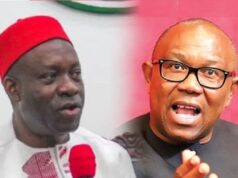
The development followed an announcement by Peter Obi, the presidential candidate of the Nigeria Democratic Congress, that his political team plans to establish an independent results tracking system that would operate alongside the commission’s official electronic platform.
Obi explained that the proposed arrangement would involve transmitting results recorded at polling units to both the official electoral platform and a dedicated situation room operated by his campaign. According to him, the purpose would be to allow his team to independently monitor the figures being recorded at polling units and compare them with the results eventually collated by the electoral commission...READ THE FULL ARTICLE HERE .
The former Anambra State governor said the system should not be interpreted as an attempt to create an alternative institution for announcing election results. Rather, he described it as a monitoring mechanism designed to ensure that votes counted and recorded at individual polling units could be traced throughout the collation process.
His proposal has nevertheless generated significant debate because of the constitutional and legal authority surrounding election result management in Nigeria.
INEC has maintained that it remains the institution legally empowered to collate and declare official election results. This means that any results independently collected by political parties or candidates would not replace the figures officially declared by the commission.
The issue is particularly sensitive because disputes over election results have historically contributed to political tension in Nigeria. The introduction of competing figures from different political camps could potentially create confusion among voters if independently collected results are presented as though they were official declarations.
Obi’s proposal has received support from other opposition figures who believe political parties should strengthen their ability to independently monitor elections. The argument is that parties should not depend entirely on official processes to determine whether results recorded at polling units are accurately reflected during subsequent stages of collation.
Under the proposed system, accredited party agents could record polling unit results, capture relevant result sheets and transmit the information to a central database. The information could then be used by the political organisation to monitor the election in real time and identify discrepancies that may require attention.
Technology specialists have acknowledged that such a system is technically possible, particularly with the availability of mobile applications, digital photography, cloud databases and communication networks. However, they have also warned that implementing the system across Nigeria would require substantial preparation.
Nigeria has a very large number of polling units, meaning that achieving nationwide coverage would require thousands of trained agents, reliable communication systems, strong cybersecurity measures and effective procedures for verifying information received from the field.
Connectivity is another major challenge. Some polling units are located in areas where internet access can be unreliable, meaning that any independent results tracking platform would need to function effectively even where network coverage is weak.
There are also concerns about the possibility of manipulated or unverified information being circulated online. If unofficial figures are released before the electoral commission completes its process, supporters of different political parties could interpret them as final results and share them widely through social media.
Legal experts have also questioned the extent to which political parties can independently collate election figures without creating confusion with the constitutional responsibilities of INEC.
While political parties are entitled to monitor elections and maintain copies of polling unit results, independently collected figures would not have the legal authority to replace results declared by the electoral commission.
The disagreement has therefore highlighted the delicate balance between independent election monitoring and the need for a single legally recognised process for declaring results.
For Obi and his supporters, the proposed system could provide an additional layer of accountability by allowing the party to maintain its own record of what happened at polling units. This could become useful if disputes arise over the accuracy of figures during the collation process.
For the electoral commission, however, the priority remains maintaining its statutory responsibility for managing the election and ensuring that official results are generated through the legally established process.
The controversy comes as political parties and opposition groups intensify preparations for the 2027 elections. With several political alliances emerging and major figures repositioning themselves, the issue of election transparency is expected to remain a central part of the political debate.
The 2027 election is likely to attract significant public attention, making confidence in the voting and result collation process particularly important. Political parties will therefore have to balance their desire to independently monitor elections with the need to ensure that unofficial information does not create unnecessary confusion.
Obi’s proposal has consequently opened another debate about how technology can be used to strengthen election monitoring in Nigeria. Whether such an arrangement can operate effectively without interfering with the authority of the electoral commission will remain an important question as preparations for the 2027 polls continue.