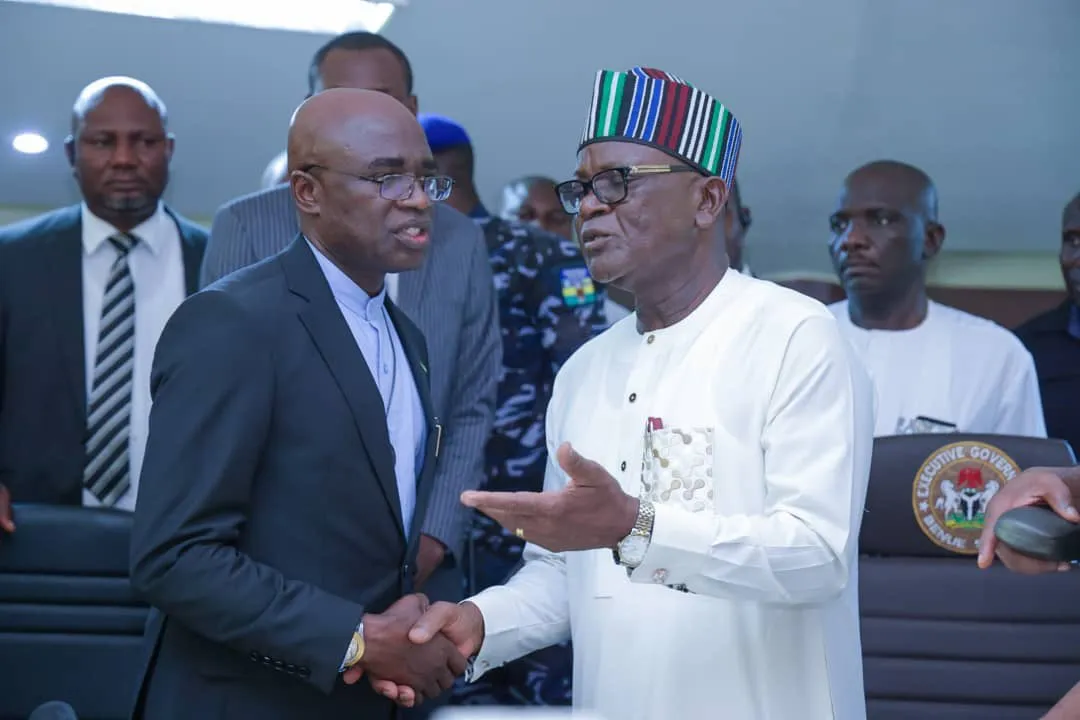
Former Benue State Governor Samuel Ortom has accused his successor, Governor Hyacinth Alia, of being behind the thugs allegedly mobilised to disrupt Peter Obi’s planned entrance into Benue State.
The allegation followed a tense political development surrounding Obi’s visit to the state, where supporters and political associates had gathered as the former presidential candidate was expected to arrive.
Ortom, who governed Benue State between 2015 and 2023, expressed concern over the reported disruption and alleged that the youths involved were acting with the backing of powerful political interests within the state...READ THE FULL ARTICLE HERE .
According to the former governor, the incident was not simply a spontaneous reaction by angry residents but an organised attempt to prevent Obi from entering the state.
He specifically accused Governor Alia of being responsible for the alleged mobilisation, a claim that has added another layer to the growing political tensions in Benue ahead of the 2027 general elections.
Obi’s political activities have attracted significant attention since the 2023 presidential election, when he contested under the Labour Party and secured a strong showing, particularly among younger voters and in several southern states.
His continued political engagements across the country have also generated considerable interest as discussions about the 2027 presidential election intensify.
The incident in Benue has therefore raised questions about political tolerance and the right of political figures to move freely and engage with supporters across different parts of the country.
Ortom’s allegation also reflects the increasingly contentious relationship between different political camps in Benue. The former governor and the current administration have previously been involved in disagreements over political and governance issues.
The latest accusation is likely to generate further reactions from supporters of both men, particularly as political alignments ahead of 2027 continue to evolve.
The allegation against Governor Alia remains a claim by Ortom and would require an independent investigation or further evidence to establish responsibility for the reported mobilisation of thugs.
The controversy has nevertheless renewed calls for political leaders and their supporters to reject violence and intimidation, especially as parties and political movements begin positioning themselves for the next general elections.
With the 2027 political season gradually gathering momentum, incidents involving political rallies, movements and public gatherings are expected to receive increased attention. The Benue development serves as another reminder of the importance of allowing political competition to take place peacefully and without threats to individuals or groups.
For Obi and his supporters, the reported disruption in Benue is likely to become part of the broader political conversation surrounding his national movement and his potential role in the 2027 presidential contest.
For Governor Alia’s administration, the allegation presents another political challenge, particularly if demands emerge for clarification over whether state actors or individuals associated with the government played any role in the incident.
The situation has therefore placed Benue once again at the centre of political attention, with competing claims likely to shape public debate as the country moves closer to the 2027 elections.