Nigeria and the United States have intensified discussions aimed at addressing Nigeria’s designation as a Country of Particular Concern over concerns surrounding religious freedom and insecurity.
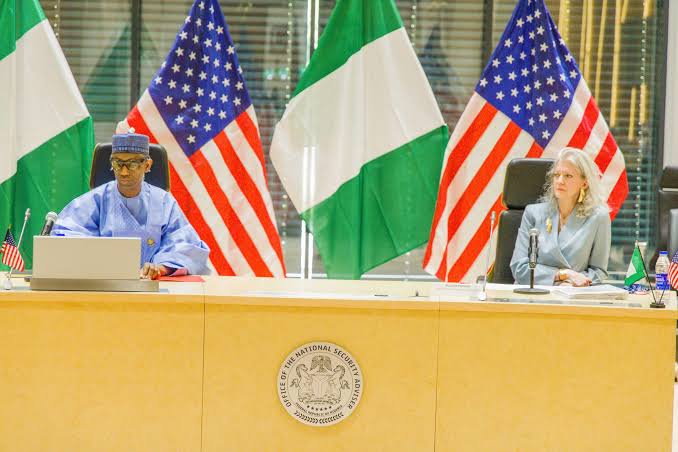
The latest development followed a fresh meeting of the US Nigeria Joint Working Group in Washington, where officials from both countries reviewed progress made since their earlier discussions in Abuja.
The meeting brought together senior officials led by US Under Secretary of State for Political Affairs Allison Hooker and Nigeria’s National Security Adviser, Nuhu Ribadu. Discussions focused largely on the protection of vulnerable communities, accountability for perpetrators of violence and strengthening security cooperation between both countries. ..READ THE FULL ARTICLE HERE .
The United States acknowledged steps taken by the Nigerian government, including the prosecution of suspected Boko Haram and Islamic State West Africa members, expansion of judicial capacity and the recruitment and training of additional police officers.
However, Washington indicated that more work remains necessary, particularly in protecting communities affected by violence and improving the resettlement of internally displaced persons to their ancestral homes.
The two countries also reviewed efforts to strengthen counterterrorism prosecutions, tackle terrorism financing and improve information sharing between security and law enforcement agencies.
Military cooperation was another major part of the discussions, with Nigeria and the United States continuing engagements aimed at improving their ability to combat terrorism and other security threats.
The CPC designation has become an important issue in Nigeria’s relationship with the United States, particularly because Washington has raised concerns about religious freedom and violence affecting Christian communities.
For Nigeria, the ongoing engagement provides an opportunity to demonstrate the measures being taken to protect citizens regardless of their religious affiliation, strengthen security institutions and ensure that perpetrators of violence are brought to justice.
The United States, meanwhile, has made it clear that progress will be assessed against concrete actions rather than assurances alone. Concerns over civilian casualties, humanitarian spending and the condition of displaced communities remain areas requiring further attention.
The latest discussions therefore represent an important step in efforts to improve Nigeria US relations while addressing the issues behind the CPC designation.
As both countries continue their engagement, the focus will be on whether the measures being implemented by Nigeria can convince Washington that sufficient progress is being made to protect religious communities, strengthen accountability and improve the country’s overall security situation.