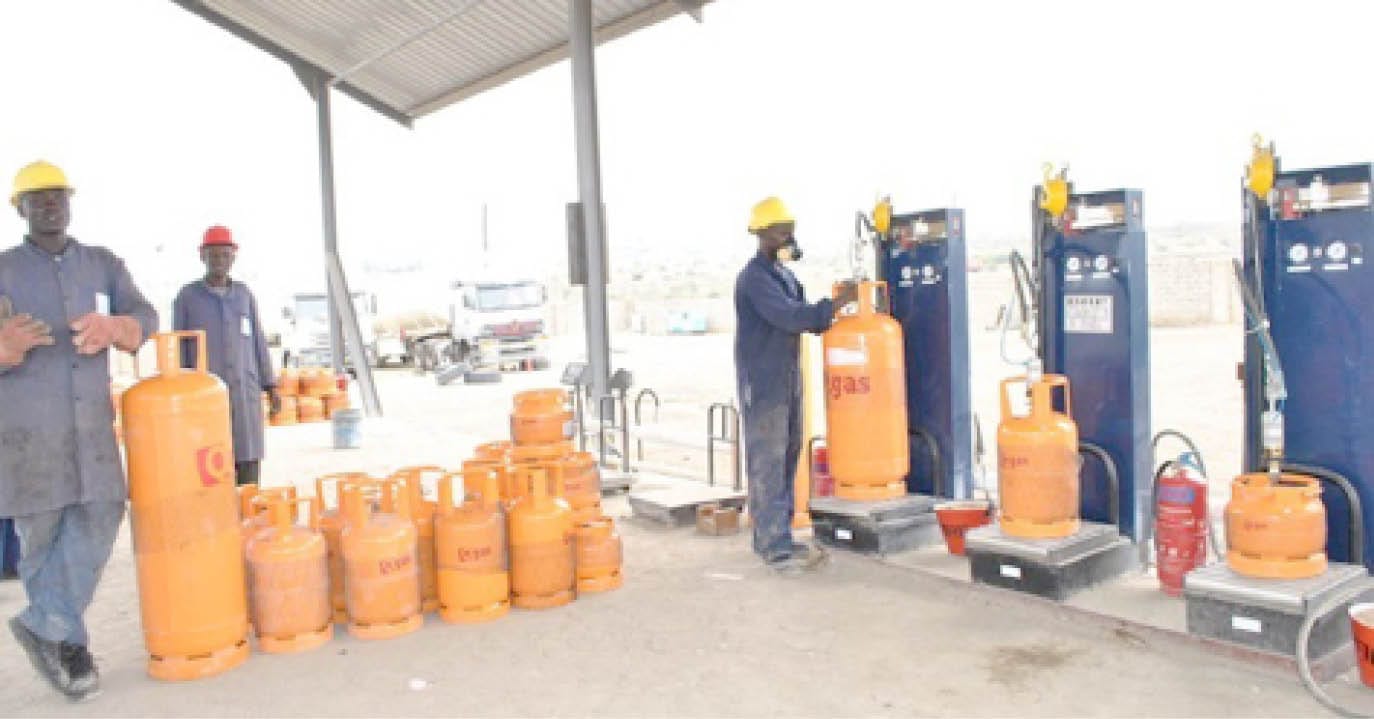
The cost of cooking gas in Nigeria has climbed sharply once again, intensifying the financial pressure on millions of households already struggling with rising living expenses, as the price of a 12.5-kilogram cylinder of Liquefied Petroleum Gas (LPG) now sells for more than ₦22,000 in several parts of the country.
The latest increase has sparked concern among consumers and industry stakeholders, with many families expressing frustration over the growing difficulty of affording a basic necessity that has become central to daily living. The development comes amid persistent inflation, high transportation costs, foreign exchange challenges and broader economic pressures affecting the prices of goods and services nationwide.
Market surveys conducted across different states revealed that the retail price of cooking gas has continued its upward trend in recent weeks. Many consumers who previously refilled a 12.5kg cylinder for between ₦15,000 and ₦18,000 are now paying over ₦22,000, while some locations reportedly recorded even higher prices depending on transportation costs and local supply conditions...READ THE FULL ARTICLE HERE .
The sharp increase has created fresh anxiety among households that rely heavily on cooking gas for food preparation. For many Nigerians, LPG had increasingly become the preferred alternative to firewood, charcoal and kerosene due to its convenience, efficiency and environmental benefits. However, the continuous rise in prices is forcing some families to reconsider their energy choices as they struggle to cope with shrinking purchasing power.
Industry operators attributed the latest surge to multiple factors affecting the domestic gas market. According to marketers and distributors, the depreciation of the naira against major foreign currencies has significantly increased importation and operational costs. Since a substantial portion of LPG consumed in Nigeria is influenced by international pricing and foreign exchange dynamics, fluctuations in the currency market often translate directly into higher retail prices.
Stakeholders also pointed to rising logistics expenses as another major factor driving costs upward. The transportation of gas from production facilities and storage depots to retail outlets has become increasingly expensive due to higher fuel prices and general operational costs within the supply chain. These expenses are ultimately passed on to consumers, contributing to the steady increase in retail prices.
The situation has generated concern among energy experts who warn that sustained increases in cooking gas prices could undermine years of efforts aimed at encouraging cleaner cooking methods across Nigeria. Over the past decade, both government agencies and private sector operators have promoted LPG adoption as a safer and more environmentally friendly alternative to traditional fuels such as firewood and charcoal. However, rising costs now threaten to reverse some of those gains.
Many consumers interviewed during market surveys expressed fears that they may soon be forced to return to less expensive alternatives despite the health and environmental risks associated with them. Some residents said they have already reduced their gas usage by limiting cooking activities or combining LPG with charcoal and firewood in order to manage household expenses.
The increase in cooking gas prices comes at a time when Nigerians are already battling rising food prices, transportation costs, electricity challenges and broader inflationary pressures. Economic analysts note that the combined effect of these factors continues to place enormous strain on household budgets, particularly for low-income earners and families with large numbers of dependents.
Energy stakeholders have repeatedly called for stronger policies aimed at boosting local LPG production and reducing dependence on imports. They argue that increasing domestic supply capacity could help stabilize prices and shield consumers from external market shocks. Nigeria possesses significant natural gas reserves, yet industry experts maintain that greater investment in infrastructure, processing facilities and distribution networks is needed to fully harness those resources for domestic consumption.
Some operators have also urged the government to introduce targeted interventions that could ease the burden on consumers and encourage wider adoption of clean cooking energy. Suggestions from stakeholders include tax incentives, improved access to foreign exchange for gas imports, expansion of local refining capacity and policies designed to reduce transportation and distribution costs.
For many Nigerians, however, the immediate concern remains the rising cost of daily survival. As cooking gas prices continue to climb beyond ₦22,000 for a 12.5kg cylinder, households are being forced to make difficult financial decisions about food preparation and energy use. The situation has become another symbol of the broader economic challenges confronting citizens as they navigate one of the toughest cost-of-living periods in recent years.
With no immediate indication that prices will decline significantly in the coming weeks, many consumers are hoping that authorities and industry stakeholders can find lasting solutions to stabilize the market. Until then, the rising cost of cooking gas is expected to remain a major concern for millions of Nigerians trying to balance household needs against an increasingly demanding economic reality