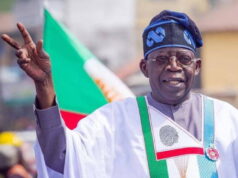
Nigeria’s ruling All Progressives Congress has intensified preparations for the 2027 general elections after officially waiving the screening process for President Bola Ahmed Tinubu, a move that signals growing confidence within the party as opposition groups continue to battle internal divisions and defections.
The decision was announced after the National Working Committee of the APC held its 188th meeting in Abuja, where party leaders resolved that Tinubu would not be required to appear before any screening panel ahead of the party’s presidential primaries. According to the party, the waiver was granted under constitutional powers allowing the leadership to act in what it described as the best interest of the party.
APC spokesperson Felix Morka explained that the ruling was influenced by endorsements already secured by the president from influential organs within the party, including the Progressive Governors Forum, members of the National Assembly, and stakeholders who had earlier backed Tinubu’s second term ambition during the APC National Summit held in 2025. The party also argued that since Tinubu had already undergone screening before emerging as the APC candidate in 2022, another round of screening was unnecessary. ..READ THE FULL ARTICLE HERE .
The development has further strengthened the perception that the APC is closing ranks early ahead of the next election cycle, with party officials projecting confidence about retaining power in 2027. APC National Chairman Nentawe Yilwatda described the party headquarters as a “beehive of activities,” noting that aspirants from different regions were already purchasing nomination forms for various positions despite Tinubu’s incumbency.
Yilwatda also used the occasion to mock the growing instability within opposition circles, insisting that the biggest challenge facing opposition parties was not the APC but their inability to stay united. According to him, Nigerians are witnessing a situation where opposition parties are more focused on internal battles than presenting a united alternative to the ruling party.
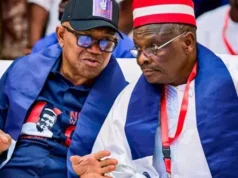
His comments come amid increasing turmoil among opposition movements ahead of the 2027 elections. The African Democratic Congress led coalition recently suffered a major setback after prominent figures such as Peter Obi and Rabiu Kwankwaso reportedly pulled out of the alliance over internal disagreements and legal disputes. Political analysts say the exits have weakened attempts to build a united opposition front capable of challenging Tinubu’s reelection bid.
Within the APC itself, leaders continue to frame the growing interest in the party as proof of political dominance and nationwide acceptance. Party officials pointed to the influx of aspirants and endorsements from different groups as evidence that the APC remains Nigeria’s strongest political platform ahead of the elections.
Observers believe the decision to waive Tinubu’s screening represents more than a procedural adjustment. Many interpret it as a symbolic endorsement of the president’s leadership and an attempt by the APC to project unity and stability in contrast to the turbulence affecting rival parties.
At the same time, analysts warn that while the APC currently appears organized, the road to 2027 remains unpredictable. Internal rivalries, economic concerns, and public perception of government performance could still shape the political landscape in unexpected ways.
For now, however, the ruling party appears determined to consolidate its advantage early, using both strategic endorsements and opposition instability as part of its broader campaign narrative ahead of what is expected to be another fiercely contested presidential election.