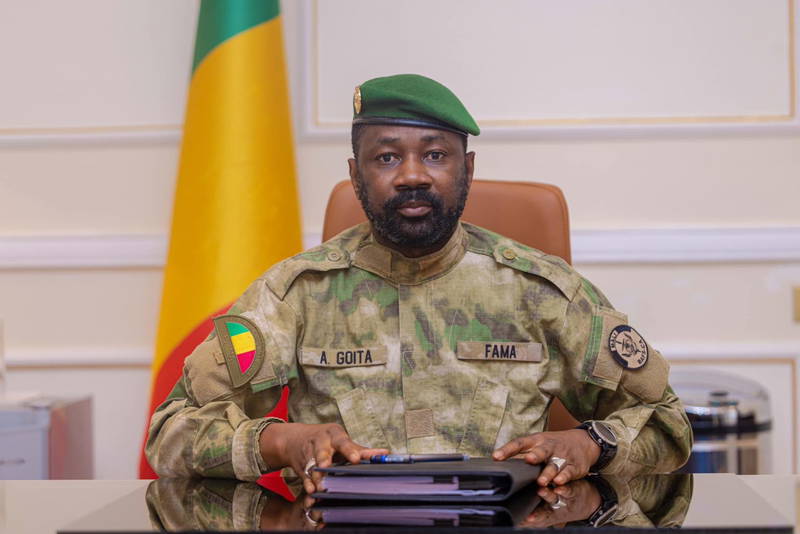
Mali’s transitional leadership has taken a significant step that is already drawing regional and international attention, as junta leader Assimi Goïta moves to assume an additional role as the country’s Defence Minister, further consolidating control over the nation’s security architecture.
The development comes at a time when Mali continues to grapple with persistent security challenges, including insurgency threats and internal instability that have defined much of its recent political trajectory. By taking direct charge of the defence portfolio, Goïta is positioning himself at the center of both political and military decision making, a move analysts say reflects a strategy aimed at tightening command and accelerating responses to security issues.
Authorities in Mali have indicated that the decision is intended to strengthen coordination within the armed forces and ensure more effective leadership in tackling ongoing threats. The government believes that centralizing control under the transitional president could enhance operational efficiency and provide clearer direction to military units engaged in counter insurgency efforts...READ THE FULL ARTICLE HERE .
However, the move has sparked mixed reactions, with some observers expressing concern over the concentration of power in the hands of a single individual. Critics argue that combining political leadership with direct control of the defence ministry could weaken institutional checks and balances, especially in a country already navigating a fragile transition toward civilian rule.
Supporters, on the other hand, view the decision as a practical response to Mali’s security realities, suggesting that strong and unified leadership may be necessary to stabilize the country. They argue that given the scale of security challenges facing Mali, decisive control over defence operations could help streamline strategies and improve outcomes on the ground.
The development also comes amid broader regional shifts in West Africa, where several countries have experienced military takeovers and evolving governance structures. Mali’s transition has been closely watched by international partners and regional bodies, many of whom continue to call for a clear timeline toward democratic elections and the restoration of civilian governance.
As the situation unfolds, attention will be focused on how this consolidation of power impacts both security operations and Mali’s political transition. The dual role assumed by Goïta is likely to shape the country’s direction in the coming months, influencing not only internal stability but also its relations with international stakeholders.
For now, the move underscores the complexities of governance in conflict affected regions, where leaders often face the difficult task of balancing security priorities with democratic expectations.