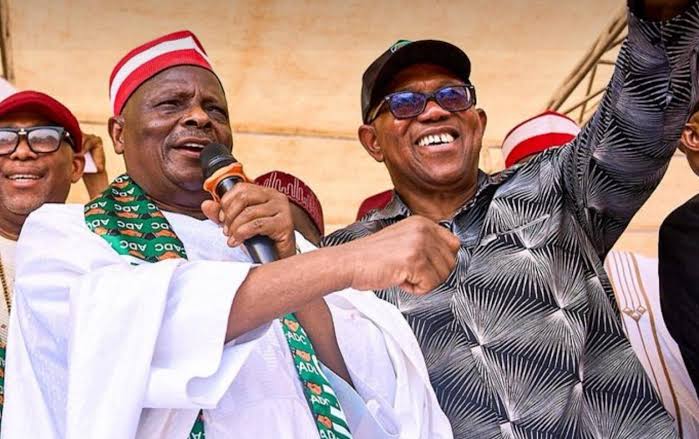
Nigeria’s opposition politics has taken another dramatic turn as emerging reports indicate that the anticipated alliance involving Peter Obi and Rabiu Musa Kwankwaso within the Nigeria Democratic Congress is now facing serious internal challenges, throwing the future of the coalition into uncertainty.
The development comes shortly after initial excitement greeted news of both political heavyweights aligning under the NDC platform, a move many had described as a potential game changer ahead of the 2027 general elections. However, fresh details suggest that disagreements over structure, leadership arrangements, and strategic direction have begun to surface within the coalition.
Sources familiar with the situation indicate that tensions are emerging over key issues such as power sharing, candidate selection processes, and the overall framework guiding the alliance. These concerns have reportedly slowed down momentum and created confusion among supporters who had expected a smooth consolidation of opposition forces...READ THE FULL ARTICLE HERE .
The situation highlights the complexities often associated with political coalitions in Nigeria, where diverse interests and ambitions must be carefully balanced to maintain unity. Both Obi and Kwankwaso command strong regional and grassroots followings, making any disagreement between their camps significant for the stability of the alliance.
Political observers note that while the idea of a united opposition remains appealing to many Nigerians, the reality of achieving cohesion among influential figures is far more challenging. Differences in ideology, strategy, and long term political goals can easily disrupt even the most promising alliances if not properly managed.
Despite the emerging crisis, there are indications that efforts are ongoing behind the scenes to resolve the issues and keep the coalition intact. Stakeholders are believed to be engaging in consultations aimed at finding common ground and preventing a complete breakdown of talks.
The unfolding situation has already sparked reactions across the political space, with some analysts warning that prolonged disagreements could weaken the opposition’s chances in 2027, while others remain optimistic that a compromise can still be reached.
As events continue to develop, attention will be focused on how both leaders navigate the challenges and whether the NDC can overcome its internal hurdles to present a united and credible front. For now, what initially appeared to be a major political breakthrough is facing its first real test, underscoring the fragile nature of alliances in Nigeria’s ever evolving political landscape.