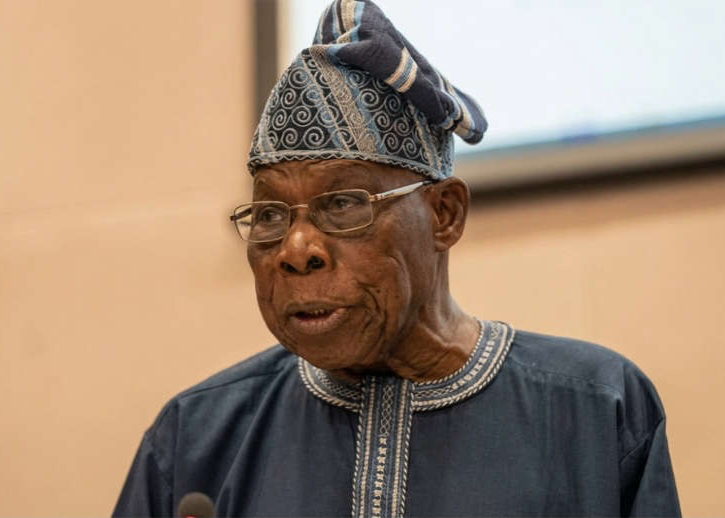
Obasanjo made the comments while reflecting on decades of failed attempts to revive the Port Harcourt, Warri and Kaduna refineries, facilities that have consumed billions of dollars in turnaround maintenance projects but have consistently failed to deliver stable and reliable production. His position, though not new, has gained renewed attention due to Nigeria’s ongoing efforts to restore local refining capacity.
According to him, the problems affecting the refineries go far beyond technical faults. He pointed to deep rooted structural inefficiencies, corruption, poor governance, and decades of neglect as key reasons why repeated rehabilitation efforts have not yielded meaningful results. He argued that the system is fundamentally broken and cannot be fixed under the current government ownership structure.
Obasanjo further explained that during his time in office, attempts were made to involve private sector operators in managing or taking over the refineries, but those efforts did not materialize. He claimed that international investors and technical partners showed little interest due to concerns over viability, transparency, and the scale of rehabilitation required to make the facilities functional again...READ THE FULL ARTICLE HERE .
His remarks come at a sensitive time when the Nigerian government, through the Nigerian National Petroleum Company Limited, is actively pursuing new strategies to bring the refineries back online. These efforts include seeking technical partnerships with foreign firms, exploring alternative funding models, and adopting more commercially driven management structures in a bid to end Nigeria’s dependence on imported refined petroleum products.
Despite these ongoing initiatives, Obasanjo maintained that the refineries are beyond repair in practical terms, suggesting that continued spending on turnaround maintenance may not produce any meaningful outcome. He implied that resources would be better directed toward alternative refining solutions or private sector led development rather than persistent attempts to revive outdated infrastructure.
The statement has triggered widespread reactions across political, economic and energy circles. Some Nigerians agree with his assessment, arguing that decades of failed rehabilitation projects have proven that government managed refineries are unsustainable. They point to repeated shutdowns, poor output, and heavy financial losses as evidence supporting his claim.
Others, however, disagree strongly, insisting that Obasanjo’s position is overly pessimistic. They argue that with modern technology, proper investment, and transparent management, the refineries can still be revived to operate efficiently. They also warn that total abandonment of the facilities would represent a significant national loss given the amount already invested.
Energy analysts have also weighed in, describing the situation as a reflection of Nigeria’s broader challenges in managing critical infrastructure. They note that the refinery issue is not only technical but also deeply tied to policy inconsistency, weak institutional oversight, and long standing dependence on imported fuel despite the country’s vast crude oil reserves.
The debate is further intensified by recent developments in Nigeria’s downstream sector, where private refining capacity has begun to play a growing role in domestic fuel supply. This shift has already started to reshape the market and reduce pressure on imports, raising questions about the future relevance of government owned refineries.
For many Nigerians, Obasanjo’s comments serve as a blunt reminder of the country’s long standing struggle to achieve energy self sufficiency. While some see his remarks as a wake up call for radical reform, others view them as an indictment of decades of failed leadership and misplaced priorities in the oil sector.
As discussions continue, attention is now focused on whether the current administration will double down on rehabilitation efforts or shift more decisively toward privatization and full market driven solutions. What remains clear is that the future of Nigeria’s refineries has once again become a central national conversation, with no easy answers in sight.