Fresh political realignments ahead of the 2027 general elections have rocked the House of Representatives after five lawmakers officially defected from the All Progressives Congress and the Peoples Democratic Party to the Nigeria Democratic Congress and the African Democratic Congress.
Among the most notable defections was that of Muhammed Bello El Rufai, son of former Kaduna State governor Nasir El Rufai, who formally dumped the APC for the Nigeria Democratic Congress. Muhammed El Rufai currently represents Kaduna North Federal Constituency in the House of Representatives, and his decision has immediately triggered widespread political reactions across the country.
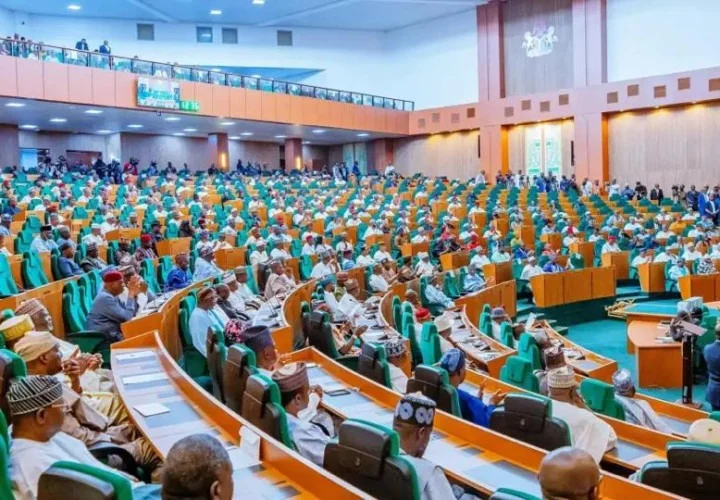
The announcement was made during plenary after Speaker of the House, Tajudeen Abbas, read the letters of defection submitted by the lawmakers. According to the lawmakers, their decisions were influenced by growing internal crises, unresolved leadership disputes, and changing political realities within their former parties. ..READ THE FULL ARTICLE HERE .
Political observers have described Muhammed El Rufai’s defection as particularly symbolic given the increasingly strained relationship between his father, Nasir El-Rufai, and the ruling APC. The former governor, once considered one of the most influential figures within the party, has in recent months openly criticized President Bola Tinubu’s administration and accused the APC leadership of abandoning internal democracy and sidelining loyal stakeholders.
Also joining the Nigeria Democratic Congress was Joshua Obika, who represents Abaji, Gwagwalada, Kuje, and Kwali Federal Constituency of the Federal Capital Territory. Obika’s latest move marks another dramatic chapter in his political journey after previously moving from the Labour Party to the APC earlier in 2026 before now defecting again to the NDC.
Another lawmaker, Abdulhakeem Kamilu, representing Wudil and Garko Federal Constituency of Kano State, also defected to the NDC. Kamilu cited unresolved leadership issues within his former political platform as the major reason behind his decision. His movement further underscores the growing instability and fluidity currently shaping opposition politics in Nigeria ahead of the next election cycle.
In a separate development, two lawmakers from Kaduna State, Suleiman Richifa and Umar Ajilo, dumped the PDP for the ADC. Both lawmakers reportedly blamed their exit on the lingering internal crisis within the PDP at both state and national levels, insisting that the party had become too divided to effectively position itself for future elections.
The latest defections come amid wider political repositioning across the country as opposition politicians intensify efforts to build stronger alliances capable of challenging the APC in 2027. Reports indicate that at least 17 lawmakers have recently aligned themselves with the Nigeria Democratic Congress, signaling a potentially major shift in Nigeria’s political landscape ahead of the next general elections.
Analysts believe the movement of lawmakers between parties reflects growing uncertainty within Nigeria’s political structure as politicians seek more strategic platforms ahead of the presidential race. The emergence of newer coalitions and increasing defections have also fueled speculation that Nigeria may witness one of its most competitive and unpredictable election cycles in recent history.
For many observers, Muhammed El Rufai’s decision to leave the APC is especially significant because it may represent a broader political message from the El Rufai political camp regarding its dissatisfaction with the ruling party. The move is expected to further deepen conversations about shifting loyalties, coalition building, and the future of opposition politics in Nigeria.
As political consultations intensify nationwide, analysts expect more defections and alliances to emerge in the coming months, potentially reshaping the balance of power within the National Assembly and across Nigeria’s broader political landscape ahead of 2027.