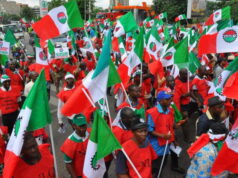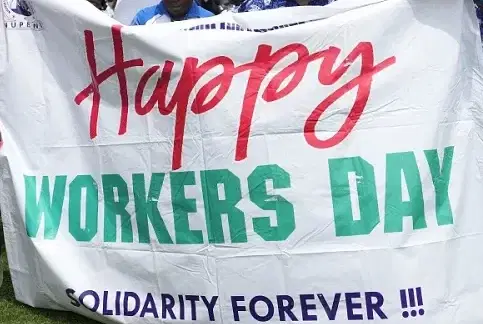
African workers have marked this year’s International Workers’ Day with strong warnings over rising inequality, economic exclusion, and what labour leaders describe as the growing capture of national wealth by a small elite class.
In a statement issued under the African Regional Organisation of the International Trade Union Confederation (ITUC-Africa), organised labour expressed concern that despite Africa’s economic potential and growing resource base, the majority of workers across the continent are becoming poorer while wealth continues to concentrate in the hands of a few powerful individuals and corporate interests. ..READ THE FULL ARTICLE HERE .
The labour body said the situation reflects a structural imbalance in African economies, where economic gains are not translating into improved living standards for workers. Instead, inflation, unemployment, low wages, and weak social protection systems continue to define the daily reality of millions of households.
One of the most alarming concerns raised in the May Day message is what labour describes as “vanishing billions,” a reference to massive financial losses attributed to illicit financial flows, corruption risks, tax avoidance, and capital flight. These leakages, according to ITUC-Africa, deprive governments of critical resources needed for infrastructure, education, healthcare, and job creation.
The organisation argued that while African economies continue to report growth in certain sectors, the benefits are not widely distributed. Workers in both formal and informal sectors are increasingly struggling to keep pace with the cost of living, while wages remain largely stagnant across many countries.
This growing imbalance, labour leaders warn, is not just an economic issue but also a political and social one. Rising inequality is now being linked to increasing frustration among citizens, weakening trust in public institutions, and growing instability in several regions.
Across the continent, workers also criticised austerity-driven policies that prioritise debt repayment and fiscal tightening over social investment. They argue that such policies often result in cuts to essential public services, wage suppression, and reduced government support for vulnerable populations.
ITUC-Africa further highlighted that Africa remains one of the most unequal regions in the world, with wealth increasingly concentrated among a very small percentage of the population. Reports show that a tiny elite controls a disproportionately large share of wealth, while the majority of citizens struggle with poverty and economic insecurity.
The labour organisation called for urgent reforms, including stronger taxation systems targeting wealthier individuals and corporations, improved transparency in public financial management, and stricter controls to curb illicit financial flows. It also advocated for greater investment in industrialisation and value-added production rather than reliance on raw commodity exports.
Another key demand from workers is increased investment in infrastructure and energy systems, which they argue are essential for job creation and industrial growth. Labour leaders also stressed the importance of expanding social protection systems to cushion vulnerable workers against economic shocks.
Despite the challenges, ITUC-Africa pointed to opportunities within the continent, particularly the African Continental Free Trade Area (AfCFTA), which it says could unlock new economic pathways if properly implemented. However, it warned that without deliberate policies to address inequality, such opportunities may continue to benefit only a small segment of society.
The May Day message also urged governments to strengthen democratic governance and ensure that economic policies are designed with workers’ welfare at the centre. Labour leaders insisted that development must be measured not only by GDP growth but by real improvements in living conditions, income distribution, and access to basic services.
As Africa celebrates Workers’ Day, the dominant message from labour is clear: without urgent action to address inequality and financial leakages, the continent risks deepening social tensions and undermining long-term development prospects.