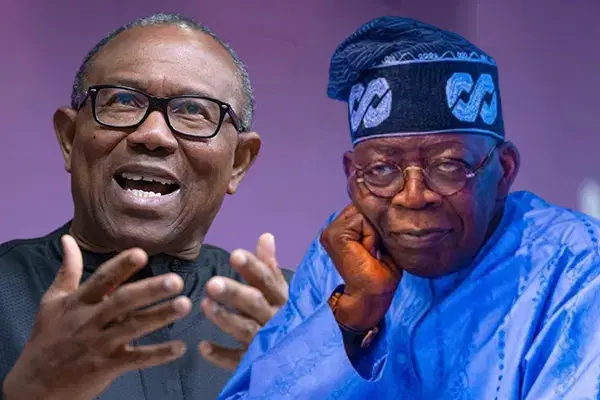
Nigeria’s economic debate has taken a sharper turn after Peter Obi delivered a scathing criticism of the borrowing approach under President Bola Ahmed Tinubu, warning that loans used for consumption rather than production could severely damage the nation’s future.
In a strongly worded statement shared publicly, Obi described the country’s borrowing pattern as dangerously misplaced, arguing that debt acquired without clear economic value or productive outcomes poses a long-term threat to national stability. He did not mince words, likening such borrowing to a “killer cancer,” emphasizing that it gradually erodes a nation’s economic strength and independence.
According to Obi, borrowing in itself is not inherently problematic, but becomes harmful when it is not tied to investments capable of generating growth, employment, or improved living standards. He stressed that responsible economies borrow with discipline, ensuring that every loan is backed by measurable returns and clear repayment strategies. In contrast, he argued that Nigeria’s current approach falls short of these standards, raising concerns about sustainability. ..READ THE FULL ARTICLE HERE .
The former Anambra State governor highlighted what he described as a deeper issue beyond rising debt figures, pointing to the lack of productivity associated with many of the country’s loans. He noted that debts which do not translate into tangible economic benefits ultimately become burdens, placing pressure on public finances without expanding the nation’s capacity to generate revenue.
A major point in Obi’s argument is the growing weight of Nigeria’s debt servicing obligations, which he described as a critical constraint on development. He explained that the ratio of debt servicing to revenue is more significant than the commonly cited debt-to-GDP ratio, as it directly affects the government’s ability to invest in essential sectors such as infrastructure, education, and healthcare.
He further warned of what he termed a “double jeopardy” scenario, where the government is forced to use current revenues to service debts that did not contribute to future economic growth. In his view, this cycle not only weakens fiscal capacity but also limits opportunities for sustainable development, effectively trapping the economy in a pattern of dependency.
Obi also referenced the Fiscal Responsibility Act of 2007, which mandates that all government borrowing must be tied to clearly defined purposes and supported by cost-benefit analysis demonstrating economic and social returns. He argued that many of the country’s recent borrowings do not meet these legal and economic benchmarks, raising questions about transparency and accountability in fiscal management.
The criticism comes amid ongoing discussions about Nigeria’s economic direction, with the Tinubu administration maintaining that borrowing remains a necessary tool for funding development projects and stabilizing the economy. However, Obi’s remarks have reignited public discourse on how loans are utilized and whether they are delivering real value to citizens.
Economic analysts note that the debate reflects a broader concern about fiscal discipline and long-term planning in emerging economies. While borrowing can accelerate development when properly managed, misuse or poor allocation of funds can lead to structural weaknesses that are difficult to reverse.
As reactions continue to trail the statement, Obi’s warning adds a critical voice to Nigeria’s evolving economic conversation, challenging policymakers to reassess borrowing strategies and prioritize investments that drive sustainable growth and national prosperity.