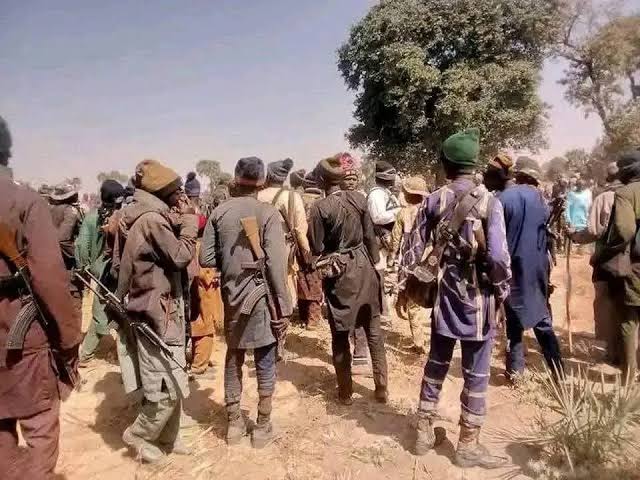
Security chiefs across Nigeria’s North-West have intensified efforts to confront terrorism, banditry and other criminal activities threatening communities in the region, with State Directors of the Department of State Services moving to strengthen intelligence sharing and joint operations.
The renewed security push followed a regional conference of State Directors of Security held in Katsina under the theme “Unite Against Terror.” The meeting brought together intelligence and security stakeholders to assess the changing security situation in the region and develop more coordinated responses to emerging threats.
The Katsina State Director of Security, Alhassan Iliyasu, said the conference provided an opportunity for security officials to compare experiences, identify operational weaknesses and develop stronger measures for tackling banditry and related criminal activities...READ THE FULL ARTICLE HERE .
According to him, the discussions are expected to produce an actionable roadmap that will guide security agencies in improving their response to terrorism and other threats across the North-West.
The security officials stressed that defeating terrorism and banditry cannot be achieved by security agencies working independently. They called for stronger cooperation between the DSS, military, police, vigilante organisations, community groups and other relevant stakeholders.
Particular attention was placed on the importance of intelligence gathering. Security officials noted that while military strength and tactical operations remain important, timely and accurate intelligence is essential for identifying criminal groups, locating their hideouts and ensuring that security operations are conducted with greater precision.
The Commander of 17 Brigade, Brigadier General Ishaya Ibrahim, described stronger collaboration among security agencies as an absolute necessity in confronting increasingly complex security threats.
He stressed the importance of closing gaps in communication, information sharing and operational coordination, noting that terrorists and bandits can exploit weaknesses among security agencies to carry out their activities.
The military commander also called for improved communication systems, joint training programmes and greater mutual support among security agencies. He further emphasised the need for security forces to maintain strong relationships with local communities because residents often possess information that can help authorities detect suspicious movements and activities.
Community participation was therefore identified as a critical part of the renewed strategy. Residents were encouraged to remain vigilant and report suspicious activities to the appropriate security authorities rather than ignoring potential threats.
Katsina State Governor Dikko Radda also welcomed the security conference, describing the theme as particularly relevant given the interconnected nature of security challenges confronting the North-West.
The governor, represented at the event by his deputy, Faruk Lawal-Jobe, said tackling insecurity requires a common strategy and sustained cooperation between security agencies and state governments.
Katsina has pursued a combination of security operations and community based initiatives in response to banditry. The state government has also supported affected communities through measures aimed at addressing some of the social and economic conditions that can worsen insecurity.
Among the interventions highlighted were medical support for victims of bandit attacks and assistance to farmers through agricultural programmes involving mechanisation, improved seeds, fertiliser distribution and extension services.
The renewed regional coordination comes as communities across the North-West continue to face security challenges involving banditry, kidnapping and terrorism. The situation has affected livelihoods, disrupted economic activities and created persistent concerns among residents in vulnerable communities.
Security officials are now seeking to move beyond isolated operations by developing a more integrated regional approach in which intelligence gathered in one state can be quickly shared with agencies and neighbouring states where necessary.
The emphasis on collaboration also reflects the reality that criminal networks do not operate according to state boundaries. Armed groups can move between communities and jurisdictions, making regional intelligence sharing and coordinated operations increasingly important.
The conference therefore represents an attempt to strengthen the security architecture of the entire North-West rather than treating individual incidents as isolated problems.
For residents, the renewed strategy could provide greater hope if the commitments made by security agencies translate into sustained intelligence led operations, faster responses to threats and stronger protection for vulnerable communities.
However, security experts and officials will ultimately be judged by the results on the ground. Beyond meetings and declarations, the effectiveness of the strategy will depend on how quickly intelligence is converted into action, how well agencies cooperate and whether communities are sufficiently protected from terrorists, bandits and other criminal groups.
With the DSS and other security agencies now pushing for a united front, the North-West is entering another critical phase in the battle against insecurity. The message from the security leadership is clear: defeating terrorism and banditry will require not only weapons and military operations, but also intelligence, cooperation and active participation from the communities most affected by the crisis.