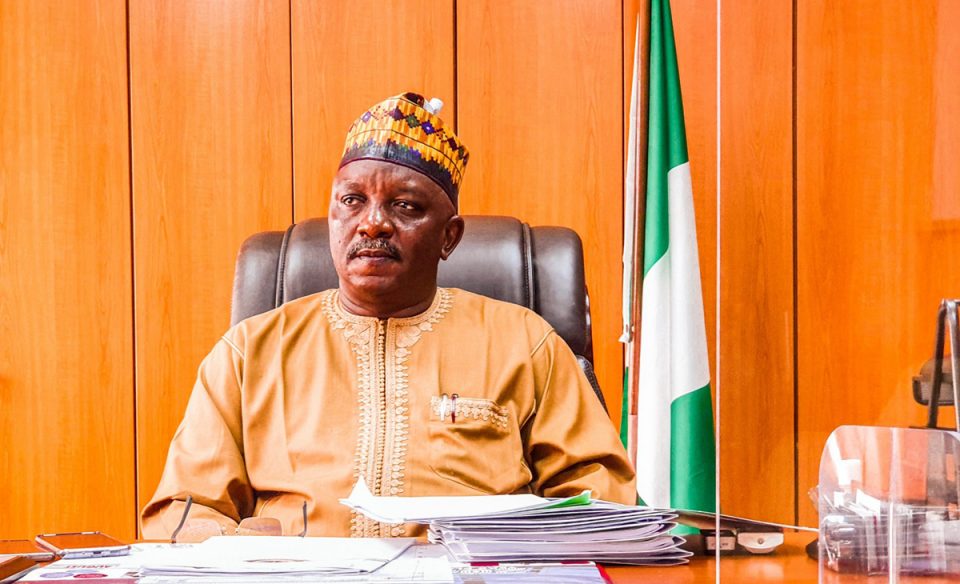
Nigeria witnessed one of the most dramatic anti-corruption judgments in recent years on Wednesday after a Federal High Court in Abuja sentenced former Minister of Power, Saleh Mamman, to 75 years imprisonment over a massive fraud involving billions of naira meant for critical electricity projects across the country.
The judgment, delivered by Justice James Omotosho, marked the climax of a high-profile corruption case that had drawn nationwide attention due to the enormous amount of money involved and the strategic importance of the power sector to Nigeria’s economy. The court found the former minister guilty on all 12 counts of money laundering, criminal breach of trust, and diversion of public funds linked to the Mambilla and Zungeru hydroelectric power projects.
According to the court, the former minister diverted approximately ₦33.8 billion that was originally allocated for the execution of key power projects designed to improve electricity generation and reduce the country’s chronic energy crisis. Justice Omotosho ruled that the prosecution, led by the Economic and Financial Crimes Commission, successfully proved beyond reasonable doubt that Mamman abused his office while serving under former President Muhammadu Buhari. ..READ THE FULL ARTICLE HERE .
The court handed the former minister seven-year jail terms on ten separate counts, while two other counts attracted three years and two years imprisonment respectively. Justice Omotosho ordered that all the sentences run consecutively, effectively bringing the total prison term to 75 years. The judge stated that there would be no option of fine on most of the counts, except for one count where a ₦10 million fine was allowed.
In a significant twist, the former minister was absent in court during both his conviction and sentencing. The court consequently ordered all security agencies, including Interpol, to immediately arrest him wherever he is found. Justice Omotosho further ruled that the prison sentence would begin counting from the day Mamman is apprehended. His lawyer reportedly informed the court that attempts to reach him had failed and that his whereabouts remained unknown.
The court also ordered the forfeiture of several assets traced to the former minister, including foreign currencies and multiple high-value properties located in Abuja. Authorities said the recovered assets were linked to proceeds from the fraud. In addition, the court directed Mamman to refund outstanding funds tied to the controversial transactions connected to the hydroelectric projects.
During the lengthy trial, the EFCC presented 17 witnesses and tendered more than 40 exhibits before the court. Prosecutors argued that funds meant for the Mambilla and Zungeru projects were illegally funneled through Bureau de Change operators, converted into foreign currencies, and delivered to the former minister and his associates. The anti-graft agency maintained that the diversion of the funds contributed significantly to delays and setbacks in projects expected to strengthen Nigeria’s struggling power supply system.
Justice Omotosho did not hide his frustration while delivering judgment. The judge criticized the former minister for allegedly prioritizing personal enrichment instead of leaving behind meaningful reforms in a sector millions of Nigerians depend on daily. He lamented that despite overseeing the nation’s power sector, the former minister failed to make a positive impact on electricity supply, stating that ordinary Nigerians continued to suffer darkness while public funds were allegedly siphoned.
The conviction has already sparked widespread reactions across the country, with many Nigerians describing it as a landmark moment in the fight against corruption. Legal analysts and political observers believe the ruling could send a strong message to public officials accused of diverting funds meant for national development projects. Others, however, argue that the true test will be whether authorities can successfully arrest the former minister and enforce the judgment.
Saleh Mamman served as Minister of Power between 2019 and 2021 after succeeding Babatunde Fashola in the role. His tenure was largely overshadowed by persistent complaints over poor electricity supply, unstable national grid performance, and mounting criticism regarding the management of the power sector.
The Mambilla Hydroelectric Power Project, one of the projects linked to the fraud allegations, has long been considered one of Nigeria’s most ambitious electricity projects, with expectations that it could significantly boost national power generation once completed. The scandal surrounding the project has therefore intensified public anger over corruption and mismanagement in the country’s infrastructure sector.
With the sentencing now officially delivered, attention has shifted to security agencies and whether they can locate and arrest the former minister to begin serving the historic jail term imposed by the court. Many Nigerians are also watching closely to see whether the judgment will become a turning point in accountability within the nation’s political class or simply another headline in the country’s long history of corruption