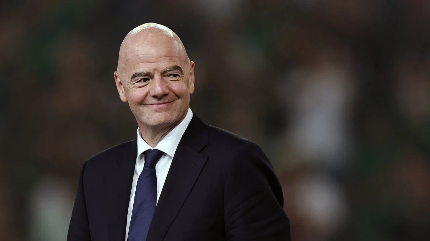
FIFA president Gianni Infantino is facing growing opposition ahead of the 2027 FIFA presidential election, with several national football associations reportedly withdrawing their support for his bid to remain in office.
The development represents a significant shift in the political landscape within world football. Infantino had previously enjoyed broad support among FIFA’s 211 member associations, with more than 200 reportedly endorsing his bid for another term before the latest controversy erupted. However, a growing number of European associations have now taken a different position. (The Guardian)
The growing opposition comes amid a major dispute over FIFA’s proposed commercial plans and Infantino’s leadership. The controversy has created tension between FIFA and UEFA and has raised fresh questions about the direction of world football under the current administration...READ THE FULL ARTICLE HERE .
Countries Opposing Infantino
Opposition to Infantino has so far been concentrated largely in Europe, with several national associations publicly distancing themselves from his re election bid.
According to the report, the countries that have indicated that they will not back Infantino include:
• Finland
• England
• Wales
• Serbia
• Sweden
• Greece
• Albania
• Croatia
• Germany
• Denmark
• Netherlands
• Norway
Finland was among the first associations to withdraw its support, followed by England, Wales and Serbia. Other European countries subsequently joined the group questioning or rejecting continued support for Infantino. (Punch Newspapers)
Norway has taken an especially strong position, with its football authorities calling for Infantino to resign following the controversy surrounding FIFA’s proposed commercial plans. (New York Post)
Why Are Countries Turning Against Infantino?
The growing opposition is closely connected to concerns about FIFA’s leadership and its proposed plans to commercialise part of the organisation’s World Cup business.
Infantino faced intense criticism over a proposal involving outside investment in FIFA’s commercial operations. The proposal reportedly involved the creation of a commercial entity that could attract billions of dollars from private investors.
The plan triggered a strong reaction from UEFA and European football associations, who argued that such major decisions concerning the future of football should not be made without adequate consultation with the relevant stakeholders.
The controversy eventually developed into a wider crisis of confidence in Infantino’s leadership, with critics accusing FIFA of becoming too commercially driven and insufficiently transparent. (The Guardian)
UEFA Opposition Adds Pressure
The opposition from European countries is particularly important because UEFA represents some of the most powerful football associations, clubs and leagues in the world.
The disagreement between UEFA and FIFA has intensified in recent weeks, with European football authorities openly challenging aspects of Infantino’s leadership and commercial strategy.
The dispute has created the possibility of a major confrontation between FIFA and UEFA if the disagreement continues to escalate.
For Infantino, losing support from a significant number of European associations could become politically damaging, particularly if the opposition develops into a coordinated campaign ahead of the FIFA election.
Infantino Still Has Strong Support
Despite the growing opposition, Infantino is far from isolated.
Before the latest crisis, more than 200 FIFA member associations had reportedly endorsed his bid for a fourth term. This demonstrates the strength of the political network he has built during his time as FIFA president.
Infantino has also maintained strong relationships with football associations outside Europe, particularly in regions where his administration has invested heavily in football development programmes.
His supporters point to FIFA’s increased financial support for member associations, expanded competitions and development initiatives as evidence of his achievements since becoming president in 2016.
This support could prove crucial because FIFA’s presidential election is decided through votes from its member associations, meaning countries from Africa, Asia, North America, South America, Oceania and other regions will have an important role to play.
A Major Test Ahead of 2027
The 2027 FIFA presidential election could now become one of the most politically significant contests in recent FIFA history.
Infantino was re elected in 2023 without opposition, making the upcoming election potentially very different if a credible challenger emerges and the current opposition continues to grow.
The biggest question is whether the countries currently opposing Infantino can persuade more associations to join their campaign or whether the FIFA president can rebuild his support base before the election.
The situation could also depend heavily on the position taken by the various continental confederations. If opposition spreads beyond Europe, Infantino could face a much more serious challenge.
What the Election Could Mean for World Football
The dispute is bigger than the future of one FIFA president because it concerns the direction of international football.
Infantino has championed an approach that places significant emphasis on increasing FIFA’s revenues, expanding competitions and creating new commercial opportunities. His critics, however, argue that football’s governing body must prioritise sporting integrity, transparency and consultation with national associations.
The controversy has therefore created a debate about what FIFA should look like in the years ahead.
If Infantino retains the presidency, he would have an opportunity to continue implementing his vision for world football. If a challenger defeats him, the organisation could enter a new era with a different approach to governance and commercial strategy.
For now, the battle is still developing. Several countries have withdrawn their backing, while many others continue to support Infantino.
With the 2027 FIFA election approaching, the coming months are expected to reveal whether the current opposition represents a temporary backlash or the beginning of a much larger revolt against Infantino’s leadership.
What is already clear is that the FIFA president is facing a level of scrutiny and opposition that could make the 2027 election far more competitive and unpredictable than his previous re election campaign.