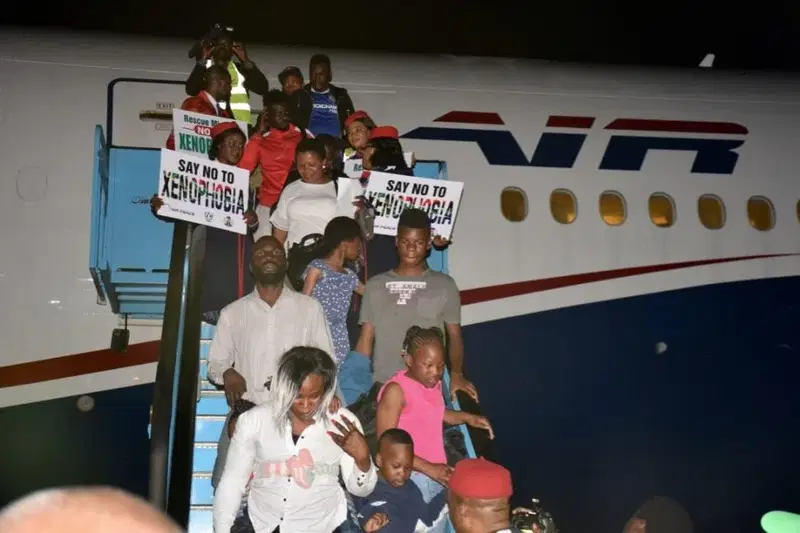
The Federal Government has intensified its evacuation of Nigerians affected by rising anti immigrant tensions in South Africa, with another batch of 271 citizens scheduled to be flown back home as authorities race to protect those seeking voluntary repatriation. However, despite the ongoing efforts, more than 15,000 Nigerians are still reportedly stranded in the country as uncertainty and fear continue to grip many foreign nationals.
The latest evacuation comes amid renewed xenophobic protests in South Africa, where anti immigration groups have issued ultimatums demanding that undocumented foreigners leave the country. The development has heightened concerns among Nigerians living in South Africa, many of whom are now seeking assistance to return home safely.
According to the Federal Government, the evacuation exercise will not end with the latest flight. Officials have assured that the repatriation programme will continue beyond the June 30 deadline announced by anti immigration groups, ensuring that every Nigerian willing to return home is given the opportunity to do so...READ THE FULL ARTICLE HERE .
The Ministry of Foreign Affairs, through its spokesperson, Kimiebi Ebienfa, dismissed allegations that stranded Nigerians were being extorted during the evacuation process. He maintained that the exercise remains free for all eligible returnees and reaffirmed the government’s commitment to ensuring a transparent and orderly operation.
An Air Peace aircraft was scheduled to depart Nigeria for South Africa to evacuate the latest batch of returnees. The government said all necessary arrangements had been made to facilitate their safe return, while additional flights are expected as more Nigerians complete the screening process.
The current crisis follows weeks of growing hostility towards foreign nationals in South Africa, prompting several African countries to begin evacuating their citizens. Nigeria has remained actively engaged through diplomatic channels while coordinating voluntary repatriation for affected citizens.
Officials have also reassured Nigerians who choose to remain in South Africa that diplomatic efforts with the South African authorities will continue to ensure their safety and the protection of their rights. Meanwhile, those returning to Nigeria are expected to undergo documentation and receive the necessary support before reuniting with their families.
The worsening situation has once again brought the issue of xenophobia in South Africa into sharp focus, raising fresh concerns over the safety of African migrants and the need for stronger regional cooperation to address recurring attacks against foreign nationals.