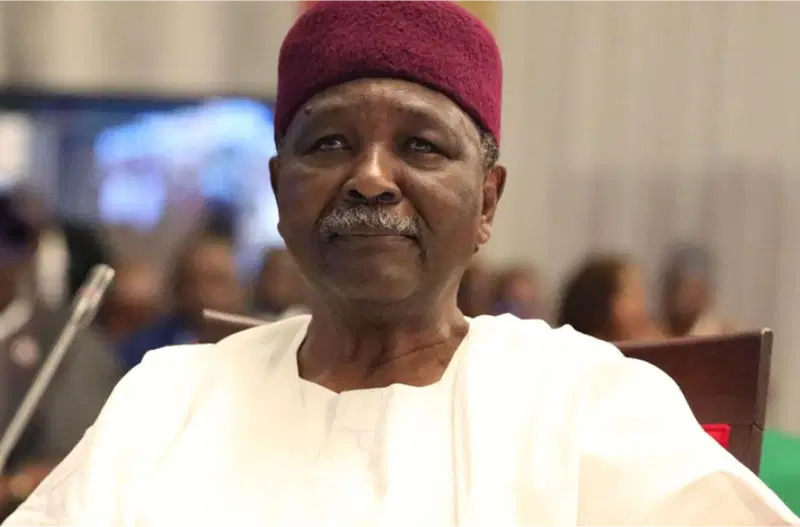
Former Nigerian Head of State, Yakubu Gowon, has defended his role during the turbulent events that preceded the Nigerian Civil War, insisting that accusations that he failed to stop the mass killings of Igbos in Northern Nigeria in 1966 are unfair and misleading. Speaking through revelations contained in his newly released autobiography, My Life of Duty and Allegiance, the retired general said he did everything within his power to halt the violence and restore peace at a time when the country was on the brink of collapse.
Gowon argued that claims suggesting the federal government deliberately ignored the attacks on Easterners, particularly Igbos, distort the realities of the period. According to him, the killings erupted amid the political and military crisis that followed the July 1966 counter-coup, during which then Head of State, Major General Johnson Aguiyi-Ironsi, was assassinated. The unrest eventually spiraled into widespread ethnic violence and deepened divisions across the country.
The former military leader recalled that reports of reprisals against Easterners in northern cities such as Kano, Kaduna, Jos, Bauchi, and Zaria deeply troubled him. He maintained that immediately after assuming office, he embarked on efforts to calm tensions through public broadcasts and direct engagements with traditional rulers, military officers, and community leaders. According to him, his primary objective was to appeal to the conscience of the people and stop further bloodshed before the situation deteriorated beyond control. ..READ THE FULL ARTICLE HERE .
Gowon also rejected suggestions that northern political authorities orchestrated the attacks. While acknowledging that some individuals may have exploited the crisis for personal or political reasons, he insisted that the violence was largely driven by angry mobs reacting to the tense atmosphere created by the coups and the spread of alarming reports across the country. He stressed that neither he nor the federal government sanctioned the killings and that substantial efforts were made to restore order.
In his account, the former leader revealed that he was emotionally devastated by reports of attacks on innocent civilians. He recounted addressing soldiers and community leaders while urging them to protect lives and ensure that those wishing to leave troubled areas could do so safely. He said he repeatedly emphasized that no grievance could justify the taking of innocent lives and that peace had to be restored for Nigeria to survive as a united nation.
Beyond the pogrom, Gowon used the memoir to revisit other defining moments in Nigeria’s history. He claimed that some northern military officers considered breaking away from Nigeria following the 1966 crisis but that he worked tirelessly to prevent such a move. He further disclosed that both Britain and the United States reportedly made it clear at the time that they would not support the disintegration of Nigeria, a factor he said influenced decisions taken by key actors during the crisis.
The former head of state also renewed criticism of the interpretation of the famous Aburi Accord by the late Biafran leader, Chukwuemeka Odumegwu Ojukwu. Gowon alleged that Ojukwu reshaped the agreement to advance the Biafran cause, worsening tensions that eventually culminated in the Nigerian Civil War. He further revealed disagreements he had with nationalist leader Obafemi Awolowo over funding and arms procurement during the conflict, describing some of those exchanges as among the most difficult moments of his administration.
Gowon’s comments are likely to reignite debate over one of the most painful periods in Nigeria’s history. The killings of thousands of Igbos and other Easterners in Northern Nigeria remain a deeply emotional subject decades after the end of the Civil War. While historians and commentators continue to differ on the extent of responsibility borne by various actors, the former leader’s latest remarks represent a fresh attempt to defend his actions and shape public understanding of events that changed the course of Nigeria forever.