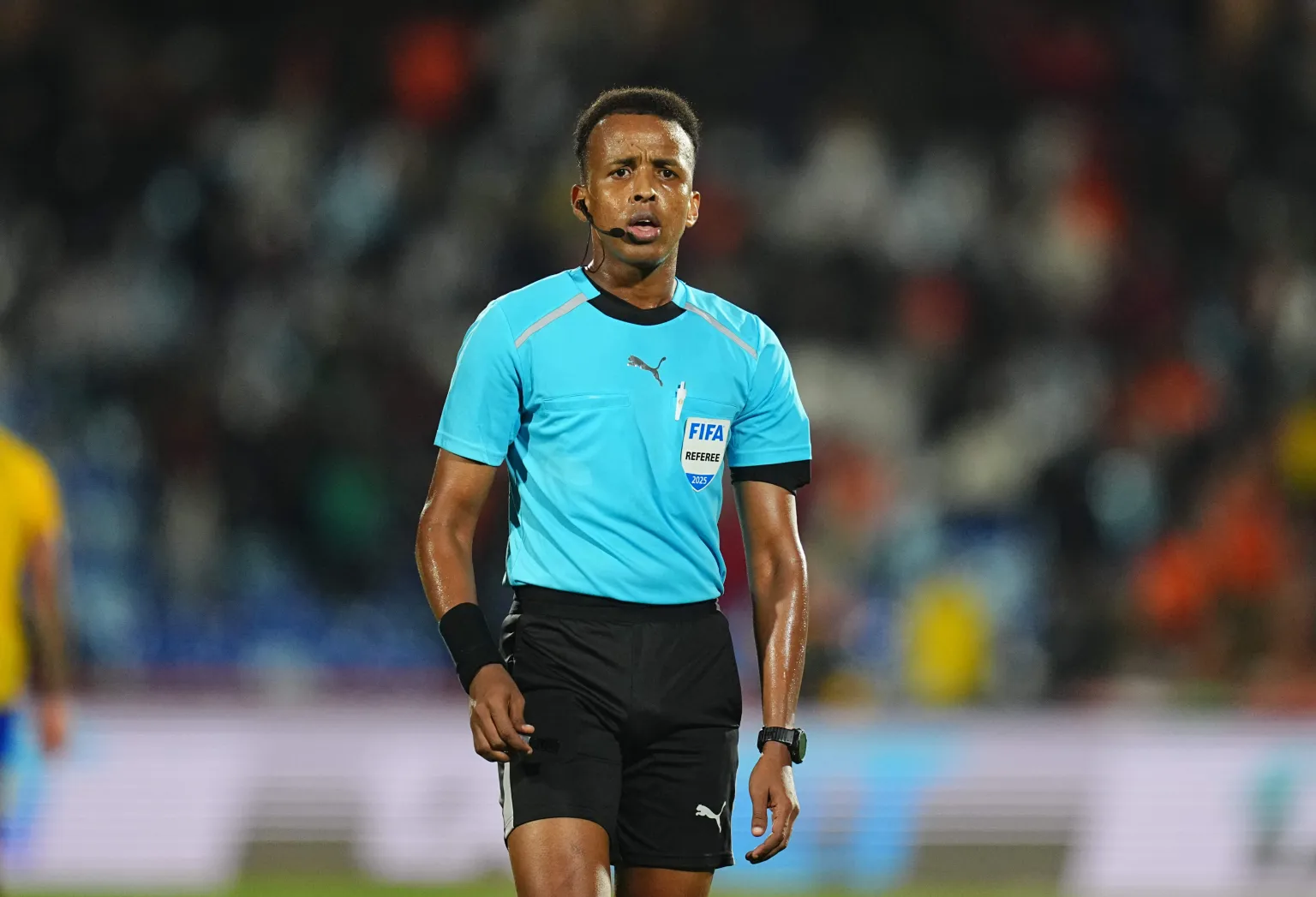
A major controversy has emerged ahead of the 2026 FIFA World Cup after Somali referee Omar Artan was reportedly denied entry into the United States, preventing him from taking part in one of football’s biggest events.
Artan, who was named Africa’s Referee of the Year in 2025 and selected among the match officials for the World Cup, was stopped from entering the United States during preparations for the tournament. The decision has sparked widespread debate across the football community, with many questioning the circumstances surrounding the move and its implications for international sports participation.
According to reports, United States authorities cited security concerns as the basis for denying Artan entry. Officials reportedly claimed that the referee had contact with individuals linked to a designated terrorist organization. However, Artan has strongly denied any knowledge of such connections, insisting that he has never knowingly associated with extremist groups and was shocked by the allegations raised during questioning by border officials...READ THE FULL ARTICLE HERE .
The development comes at a sensitive time as the United States, alongside Canada and Mexico, prepares to host the largest FIFA World Cup in history. The tournament is set to feature 48 nations and more than 100 matches, with officials from around the world expected to play crucial roles in ensuring its smooth operation.
Artan’s exclusion has raised concerns about how immigration and security policies could affect international sporting events. Critics argue that referees and other tournament officials who have already undergone FIFA’s rigorous vetting process should not face last minute obstacles that could undermine the integrity of the competition.
The referee, who has built a strong reputation across African football, expressed disappointment over the situation and maintained that he has done nothing wrong. Supporters have called for greater transparency regarding the decision, while some observers fear the incident could create uncertainty for other officials traveling to the tournament.
As discussions continue, neither FIFA nor tournament organizers are expected to take the issue lightly, given the importance of having the best match officials available for the World Cup. The incident has added an unexpected layer of controversy to the buildup of a competition that is already attracting global attention.
With the tournament set to begin, many within the football world will be watching closely to see whether the matter can be resolved or whether one of Africa’s most respected referees will ultimately miss the opportunity to officiate on the sport’s grandest stage.