Nigeria may be on the verge of one of the most far-reaching constitutional and security reforms in its history as the Senate has announced plans to pass the bill seeking the establishment of state police this week. The development has generated widespread interest across the country, with many Nigerians viewing it as a potentially transformative step toward tackling the persistent security challenges that have troubled communities for years.
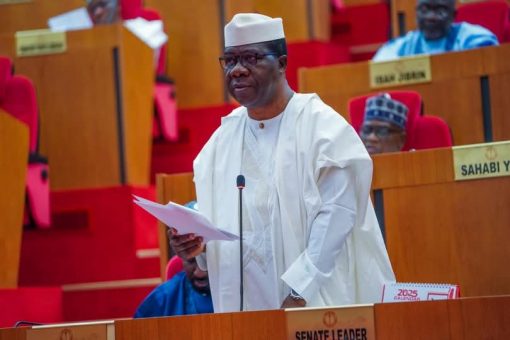
Senate Leader, Senator Opeyemi Bamidele, disclosed that the National Assembly is ready to advance the legislation after extensive consultations with critical stakeholders, including security agencies, constitutional experts, state governments and officials of the Federal Government. According to him, lawmakers have reached a point where decisive action is necessary, given the increasing pressure on existing security institutions and the growing demand for a more localized approach to policing.
The proposed legislation seeks to amend the 1999 Constitution to allow individual states to establish and operate their own police forces alongside the Nigeria Police Force. If successfully passed and ratified, the reform would fundamentally alter the country’s security structure, ending decades of exclusive federal control over policing and creating a system that gives states greater responsibility in maintaining law and order within their territories...READ THE FULL ARTICLE HERE .
For many years, discussions surrounding state police have remained one of the most debated issues in Nigeria’s political and security landscape. Advocates of the reform have consistently argued that the country’s current centralized policing arrangement is no longer sufficient to address the diverse and complex security challenges facing different regions. They maintain that a single national police force is overstretched and often unable to effectively respond to local threats in a country with more than 200 million people, vast geographical territory and significant cultural diversity.
The renewed push for state police comes against the backdrop of growing insecurity across various parts of the country. Incidents of banditry, kidnapping, terrorism, communal clashes, armed robbery and farmer-herder conflicts have continued to place enormous pressure on security agencies. In many cases, critics of the existing system argue that federal policing structures are too distant from local communities to gather timely intelligence or respond quickly enough to emerging threats.
Supporters of state police believe that locally controlled security agencies would possess a deeper understanding of the communities they serve. They argue that officers recruited from local environments are more familiar with the language, culture, terrain and social dynamics of their areas, making them better positioned to identify suspicious activities, prevent crimes and build trust with residents. According to this school of thought, community-based policing could significantly strengthen intelligence gathering and improve security outcomes.
Senator Bamidele explained that the National Assembly has given special attention to the state police proposal because of its importance to national security. He noted that lawmakers deliberately separated the bill from other constitutional amendment proposals in order to accelerate its consideration and avoid unnecessary delays. The Senate Leader stressed that the urgency of the security situation requires bold and practical solutions, adding that the legislature is committed to ensuring that the reform receives the attention it deserves.
The move also reflects a growing consensus among political leaders across the country. Over the years, numerous state governors, traditional rulers, security experts and civil society groups have openly supported the creation of state police. Several governors have repeatedly argued that as chief security officers of their states, they require greater control over security resources and personnel to effectively protect lives and property. Many have pointed to the success of regional security outfits such as Amotekun in the South-West and other community-based initiatives as evidence that localized security structures can complement federal efforts.
President Bola Tinubu’s administration has also signaled support for reforms aimed at strengthening security and enhancing the capacity of states to address local threats. This has further increased optimism among proponents of state police, who believe that the political climate is now more favorable than at any other time in recent years.
Despite the widespread support, the proposal has not been without controversy. Critics of state police have expressed concerns that state governors could potentially misuse local police forces for political purposes. Some fear that opposition politicians, activists and critics of state governments could become targets if adequate safeguards are not put in place. Others have warned that uneven economic development among states could create disparities in funding, training and operational capacity, leading to differences in the quality of policing across the country.
To address these concerns, lawmakers and constitutional experts have reportedly been working on mechanisms to ensure accountability, transparency and professional standards within any future state police system. Proposed safeguards are expected to include clear operational guidelines, oversight structures and legal provisions designed to prevent abuse of power while protecting citizens’ rights and freedoms.
Under Nigeria’s constitutional amendment process, passing the bill in the National Assembly is only one stage of a broader legislative journey. Once approved by both the Senate and the House of Representatives, the proposal must be transmitted to the 36 State Houses of Assembly for consideration. To become law, it must secure the approval of at least two-thirds of the state legislatures. Following this, the amendment would be forwarded to President Tinubu for assent, completing the process required for implementation.
Political observers note that the reaction of state assemblies will play a crucial role in determining the future of the reform. Given the long-standing support for state police among many governors and regional leaders, there is growing expectation that the proposal could receive the necessary backing. However, debates are expected to continue over the structure, funding, recruitment processes and operational relationship between state police commands and federal security agencies.
The prospect of state police has also reignited broader conversations about restructuring and federalism in Nigeria. Many supporters view the initiative as part of a larger effort to devolve powers from the Federal Government to the states and strengthen grassroots governance. They argue that giving states more responsibility for security aligns with the principles of federalism and could improve efficiency in addressing local challenges.
As the Senate prepares to deliberate on the bill this week, Nigerians across different sectors are watching closely. Security experts, political stakeholders, business leaders and ordinary citizens recognize that the outcome could have profound implications for the country’s future. For some, the establishment of state police represents a long-overdue solution to persistent security challenges. For others, it is a reform that must be approached carefully to ensure that it strengthens democracy rather than creating new avenues for abuse.
Regardless of differing opinions, there is little doubt that the state police bill has become one of the most consequential legislative proposals currently before the National Assembly. If passed and eventually signed into law, it would mark a historic turning point in Nigeria’s security architecture and could redefine how policing is conducted across the federation for generations to come.
With lawmakers expected to take action in the coming days, the nation now awaits what could be a landmark decision capable of reshaping the fight against insecurity and transforming the relationship between federal and state authorities in the maintenance of peace, order and public safety.