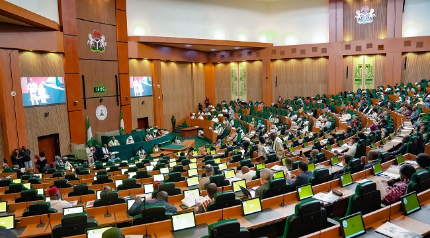
Nigeria’s House of Representatives has approved President Bola Ahmed Tinubu’s request to secure a $516 million external loan, marking a significant step forward in the federal government’s push to deliver one of the country’s most ambitious infrastructure projects in recent years.
The approval, granted during plenary in Abuja, followed the consideration and adoption of a report presented by the House Committee on Aids, Loans and Debt Management. Lawmakers moved swiftly through the legislative process, ultimately giving the green light for the syndicated loan facility, which is to be sourced from Deutsche Bank. ..READ THE FULL ARTICLE HERE .
At the heart of the borrowing request is the construction of key sections of the Sokoto–Badagry Superhighway, a flagship project under the Tinubu administration’s infrastructure agenda. The proposed highway, which spans roughly 1,000 kilometres, is designed to link Nigeria’s North-West to the South-West, cutting across major states including Sokoto, Kebbi, Niger, Kwara, Oyo, Ogun, and Lagos.
According to details presented to lawmakers, the approved loan will specifically fund Sections 1, 1A, and 1B of the project, covering about 120 kilometres of the expansive road network. The project is expected to significantly improve connectivity across regions, reduce travel time, and unlock new economic opportunities along the corridor by easing the movement of goods and services.
The federal government has argued that the highway will serve as a critical economic artery, strengthening trade links between agricultural hubs in the North and commercial centers in the South. It is also expected to enhance food supply chains, lower transportation costs, and foster national integration by bridging long-standing infrastructural gaps.
Beyond the approval itself, the House attached strict conditions aimed at ensuring transparency and accountability in the use of the funds. Lawmakers mandated relevant government agencies, including the Ministry of Finance, the Debt Management Office, and the Ministry of Works, to provide quarterly reports detailing disbursement and progress on the project.
The financing structure includes additional safeguards, with partial guarantees from international institutions expected to reduce lending risks and secure more favorable terms for Nigeria. The loan is structured with a tenure of up to nine years, including a grace period, and is benchmarked against global interest rate standards.
While the approval has been welcomed by proponents of infrastructure development, it also comes amid ongoing concerns about Nigeria’s rising debt profile. Critics have continued to question the sustainability of increased external borrowing, especially as the country navigates economic pressures and fluctuating exchange rates. Nevertheless, government officials maintain that such loans are necessary to fund critical infrastructure that can stimulate long-term growth and reduce reliance on domestic borrowing.
The latest approval adds to a series of borrowing initiatives by the current administration, reflecting a broader strategy to fast-track infrastructure development across the country. With legislative backing now secured, attention will shift to implementation, as Nigerians watch closely to see whether the ambitious Sokoto–Badagry Superhighway will deliver on its promise of transforming transportation and boosting economic activity nationwide.
As the project moves from approval to execution, it stands as a defining test of the government’s ability to translate large-scale borrowing into tangible development outcomes that can impact millions of lives across the country.