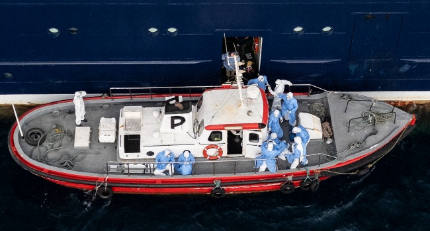
Global health authorities are intensifying efforts to contain a rare hantavirus outbreak linked to the Dutch expedition cruise ship MV Hondius after another infected passenger was evacuated to Europe for urgent medical care. The development has deepened international concern as multiple countries race to trace passengers and prevent further spread of the virus.
The latest evacuation came as the vessel continued its journey toward Spain’s Canary Islands, where health officials are preparing strict medical protocols for the arrival of passengers and crew onboard. Reports indicate that the outbreak has already claimed at least three lives, while several confirmed and suspected cases are now being monitored across different countries in Europe, Africa, and North America.
The outbreak is believed to involve the Andes strain of hantavirus, a particularly rare variant known for its limited ability to spread from person to person through close contact. Health experts say most hantavirus infections are usually transmitted through exposure to infected rodents, especially by inhaling particles from rodent urine, saliva, or droppings. However, the Andes variant has raised alarm because it has previously shown evidence of human-to-human transmission in South America. ..READ THE FULL ARTICLE HERE .
The MV Hondius had departed from Ushuaia, Argentina, in early April for a polar expedition cruise around isolated islands in the South Atlantic. Problems reportedly began when passengers onboard started showing flu-like symptoms, with one passenger dying during the voyage before the illness was identified. Additional passengers later fell ill, prompting emergency evacuations and an international health response.
According to international health agencies, the outbreak currently remains limited, but authorities are taking no chances because hantavirus infections can become severe and potentially fatal. Symptoms often begin with fever, fatigue, headaches, muscle pain, nausea, and breathing difficulties. In serious cases, the disease can progress rapidly into hantavirus pulmonary syndrome, a dangerous respiratory condition that can lead to organ failure and death.
The World Health Organization has stated that while additional cases may emerge due to the virus’s long incubation period, the broader public health risk remains low for now. Nevertheless, countries including the United Kingdom, the United States, South Africa, Switzerland, Germany, and the Netherlands have activated contact tracing operations to monitor passengers who may have been exposed during the cruise.
Reports also indicate that some passengers had already disembarked before the outbreak was fully identified, making global tracking efforts more complicated. Health officials are now urging anyone who recently traveled on the vessel or had close contact with infected individuals to remain alert for symptoms and cooperate fully with monitoring procedures.
Medical teams from the World Health Organization and the European Centre for Disease Prevention and Control have reportedly joined efforts onboard the ship to assess passengers, strengthen isolation measures, and oversee safe disembarkation procedures once the vessel reaches Europe.
The outbreak has once again highlighted how quickly infectious diseases can cross borders in an interconnected world, especially through international travel. Public health experts say the situation is being watched closely, not because a global pandemic is expected, but because rare viruses with even limited human transmission potential demand swift international coordination and transparency.