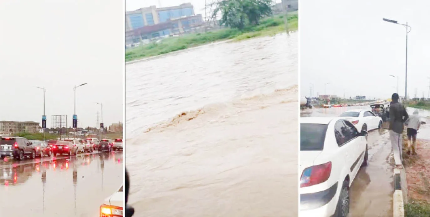
The Federal Government has issued a fresh flood warning to residents across 24 states and the Federal Capital Territory, following forecasts of heavy rainfall, rising river levels and increased surface runoff.
The warning covers the period from September 27 to October 10, 2026, with several communities classified as critical, high or moderate flood-risk areas.
The latest alert comes as saturated soil and rising water levels increase the possibility of flooding in vulnerable communities...READ THE FULL ARTICLE HERE .
24 States Listed Under Critical Risk
States with communities classified as being at critical risk include Benue, Kogi, Kwara, Niger, Adamawa, Bauchi, Taraba, Rivers, Edo, Delta, Cross River, Bayelsa, Akwa Ibom, Abia, Anambra, Ebonyi, Enugu, Imo, Ekiti, Lagos, Ogun, Ondo, Osun and Oyo.
Several major cities are also covered by the warning, including Makurdi, Lokoja, Minna, Port Harcourt, Benin City, Asaba, Calabar, Uyo, Aba, Onitsha, Enugu, Owerri, Ado-Ekiti, Lagos, Abeokuta, Akure, Osogbo and Ibadan.
Riverine and coastal communities in states such as Rivers, Delta, Bayelsa, Cross River and Akwa Ibom are among areas facing particularly significant exposure.
Abuja and Other Areas Also on Alert
The Federal Capital Territory, alongside Nasarawa, Plateau, Bauchi, Taraba, Adamawa and Kebbi, has communities listed under the high-risk category.
In the FCT, areas including Abuja Municipal, Asokoro, Bwari, Garki, Gwagwalada, Gwarinpa, Kubwa, Kuje, Kwali, Lugbe, Maitama, Nyanya and Wuse were identified as locations requiring heightened attention.
Why the Flood Risk Is Rising
The authorities attributed the potential flooding to a combination of heavy rainfall, high soil moisture, rapid surface runoff, drainage surcharge and rising river levels.
These factors can combine to overwhelm drainage systems and waterways, particularly in low-lying, riverine and densely populated areas.
FG Issues Safety Advice
Residents in critical-risk communities have been advised to maintain an immediate flood watch and identify safe evacuation routes before conditions deteriorate.
People have also been urged to protect vulnerable family members and secure important documents, medicines, food and other essential items.
Residents are advised to avoid settling, trading, parking vehicles or storing goods on floodplains, wetlands, riverbanks and low-lying drainage corridors.
People should also avoid walking or driving through moving floodwater, while children should be kept away from flooded areas.
Authorities have directed emergency agencies, local government officials and community flood focal persons to strengthen monitoring around rivers, streams, bridges, culverts, drains, reservoirs and other flood-prone locations.
The latest warning is expected to remain closely monitored as weather and river conditions develop, with authorities stressing the importance of acting on early warnings to reduce the potential impact of flooding.