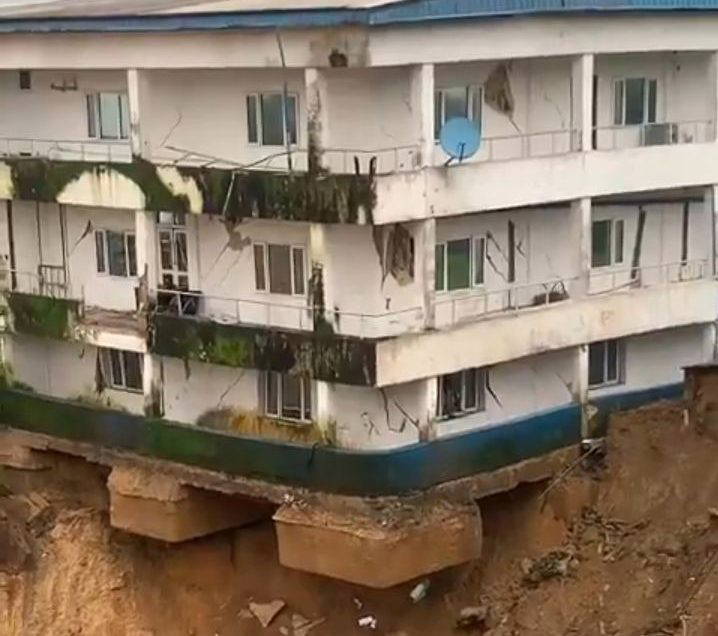
A hospital building in Calabar, the Cross River State capital, has collapsed after a landslide triggered by heavy rainfall, raising fresh concerns about the dangers posed by erosion and unstable terrain in parts of the city.
The affected facility, identified as UNICEM Hospital, reportedly collapsed on Thursday, August 13, 2026, after hours of torrential rainfall destabilised the hillside around the structure.
Footage circulating online showed a large portion of the earth sliding towards the hospital complex before parts of the building gave way. The collapse left concrete debris and exposed reinforcement rods scattered around the affected area, while residents watched the incident from a safe distance...READ THE FULL ARTICLE HERE .
The sudden collapse reportedly caused panic among people in the area, particularly because the facility is a healthcare centre. However, there was no official confirmation of deaths or injuries at the time the incident was reported. Authorities had also not confirmed whether anyone was trapped inside the building.
The incident has once again highlighted the potential risks associated with heavy rainfall in Calabar, particularly in areas where erosion, flooding and landslides can weaken the ground and threaten buildings located close to vulnerable slopes.
The heavy downpour appears to have played a significant role in destabilising the terrain around the hospital. When large amounts of rainwater penetrate already vulnerable soil, the additional weight and pressure can contribute to slope failure, causing large volumes of earth to move suddenly.
The collapse has also raised broader questions about construction and land use in areas exposed to erosion and landslide risks. Concerns surrounding drainage systems, development on unstable slopes and compliance with building regulations are likely to receive renewed attention following the incident.
Experts and residents are expected to call for proper geotechnical assessments before construction is approved in areas considered vulnerable to landslides. Such assessments can help determine whether the soil and underlying terrain are capable of supporting a proposed structure and what measures may be necessary to reduce environmental risks.
There are also likely to be renewed calls for improved drainage infrastructure and closer monitoring of areas experiencing severe erosion. Proper management of stormwater can help reduce the amount of water accumulating around vulnerable slopes, although the effectiveness of any intervention depends on the specific characteristics of the affected area.
As of the time of the report, there had been no detailed public statement from the Cross River State Government or relevant emergency management authorities regarding the cause of the collapse, the extent of the damage or the safety of surrounding structures.
The incident serves as another reminder of the dangers that extreme rainfall can pose to communities, especially where buildings are constructed close to steep or unstable terrain. Beyond the immediate damage, authorities may now have to assess the surrounding area to determine whether other structures could also be at risk.
Residents in communities affected by erosion and landslides are also being urged to take visible signs of ground movement seriously, particularly during periods of prolonged or intense rainfall. Cracks in the ground, sudden changes in drainage patterns, tilting structures and unusual movement of soil can indicate potential instability and should be reported to the appropriate authorities.
The collapse of the UNICEM Hospital has therefore brought renewed attention to the need for stronger environmental monitoring, safer construction practices and better preparation for the effects of heavy rainfall in Calabar.
While the full extent of the damage and any possible casualties remain subject to official confirmation, the incident has already become a significant warning about the consequences of building and maintaining structures in areas vulnerable to landslides and soil erosion.