Building muscle is not only about spending hours in the gym. What you eat, how much you eat and how well you recover all play important roles in determining how your body responds to resistance training.
Among all the nutrients associated with muscle growth, protein remains one of the most important because it provides amino acids that the body uses to repair and build muscle tissue. However, eating more protein does not automatically mean building more muscle. Research suggests there is a useful range for people who regularly perform resistance training.
Why is protein important for muscle growth?..READ THE FULL ARTICLE HERE .
Protein is made up of amino acids, which serve as building blocks for cells and tissues throughout the body.
When you exercise, particularly during resistance training, your muscles experience stress that needs to be repaired. Adequate protein provides the amino acids required for muscle protein synthesis, the process involved in repairing and building muscle tissue.
This is why strength training and adequate protein intake work together. Protein alone cannot replace resistance exercise when the goal is to increase muscle size and strength.
So, how much protein do you need?
For adults who are actively trying to build muscle, research generally places useful protein intake above the standard minimum recommended for sedentary adults.
A practical range supported by research is approximately 1.2 to 1.6 grams of protein per kilogram of body weight per day, particularly when combined with resistance training. The International Society of Sports Nutrition gives a somewhat broader range of 1.4 to 2.0 grams per kilogram for most exercising individuals.
For example:
• A person weighing 60 kg may aim for roughly 72 to 96 grams of protein per day.
• A person weighing 70 kg may aim for roughly 84 to 112 grams per day.
• A person weighing 80 kg may aim for roughly 96 to 128 grams per day.
• A person weighing 90 kg may aim for roughly 108 to 144 grams per day.
These are general estimates rather than universal prescriptions. Your age, training level, overall diet, health status and fitness goals can affect your individual needs.
More protein does not always mean more muscle
This is one of the biggest misconceptions surrounding fitness nutrition.
Research indicates that increasing protein intake can support muscle growth when combined with resistance training, but the benefits eventually level off.
A large meta analysis found that protein supplementation produced additional improvements in muscle and strength during resistance training, but intakes above approximately 1.6 grams per kilogram per day generally did not provide additional gains in fat free mass.
This means someone does not necessarily need an extremely high protein diet to build muscle effectively.
Eating 250 grams of protein every day, for example, does not automatically produce better results than eating an appropriate amount for your body weight and training routine.
Your workouts still matter
Protein is only one part of the muscle building equation.
Resistance training provides the stimulus that tells your body it needs to adapt. Without regular strength training, simply increasing protein intake is unlikely to produce the muscle growth many people are looking for.
Effective muscle building generally involves:
• Consistent resistance training
• Gradually increasing training difficulty over time
• Consuming enough protein
• Eating enough total calories and nutritious foods
• Getting adequate sleep and recovery
• Maintaining consistency over several months
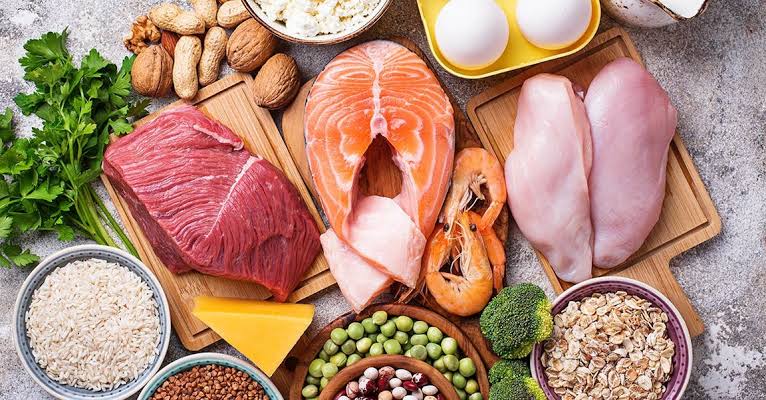
What are good sources of protein?
You do not necessarily need expensive supplements to meet your protein requirements.
Protein can come from a wide range of animal and plant foods.
Animal based sources include:
• Eggs
• Fish and seafood
• Chicken and other poultry
• Lean meat
• Milk and other dairy products
• Yoghurt
Plant based sources include:
• Beans
• Lentils
• Peas
• Soy foods
• Nuts
• Seeds
• Some whole grains
A varied diet can provide the amino acids your body needs. People following plant based diets can also meet their protein requirements by consuming a variety of protein rich foods throughout the day.
Do you need protein supplements?
Not necessarily.
Protein powders can be convenient for people who struggle to obtain enough protein from regular meals, but they are not required for muscle growth.
Whey and other protein supplements are simply concentrated sources of protein. If your regular diet already provides enough protein, adding a supplement may not provide a meaningful additional benefit.
Whole foods also provide other important nutrients that protein powders may not contain.
When should you eat protein?
Total daily protein intake appears to be more important than obsessing over a particular minute on the clock.
Research does suggest that consuming protein around resistance exercise can support muscle protein synthesis, and studies have examined benefits from protein consumed after exercise and at other times of the day.
A practical approach is to include a source of protein in several meals rather than trying to consume almost all of your daily protein in one sitting.
For example, someone targeting 100 grams per day could spread that intake across breakfast, lunch, dinner and a snack.
Can you eat too much protein?
Yes.
Although protein is an essential nutrient, extremely high intake can make it harder to maintain a balanced diet and may contribute to issues such as digestive discomfort, especially when high protein foods replace fibre rich foods and other important nutrients.
People with kidney disease or other medical conditions should not dramatically increase their protein intake without discussing it with a qualified healthcare professional.
The goal should not be to consume the maximum possible amount of protein. The goal is to consume an appropriate amount while maintaining a balanced diet.
What about older adults?
Protein needs and muscle building responses can change with age.
Older adults can experience age related muscle loss, and resistance exercise combined with adequate protein remains important for maintaining muscle and physical function. However, research suggests that the response to protein supplementation can vary with age.
Anyone with specific nutritional or medical needs should consider getting individualized advice from a registered dietitian or healthcare professional.
The bottom line
If you are trying to build muscle, you probably need more protein than the basic amount required to prevent deficiency.
For many people who regularly perform resistance training, around 1.2 to 1.6 grams of protein per kilogram of body weight per day is a useful evidence based target, while some exercising individuals may benefit from amounts toward 2.0 grams per kilogram depending on their circumstances.
But protein is not a shortcut to bigger muscles.
The winning combination is consistent resistance training, adequate protein, sufficient overall nutrition, good sleep and patience. Rather than chasing extreme protein numbers, focus on meeting your needs consistently through a balanced diet and a well structured training programme.