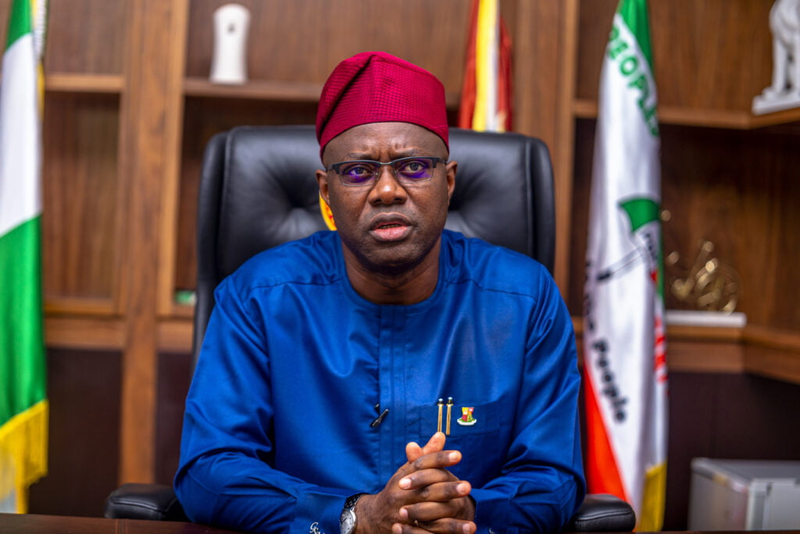
The successful rescue of pupils and teachers abducted from schools in Oriire Local Government Area of Oyo State may have brought relief to many Nigerians, but it has also triggered a wider national conversation about insecurity and accountability following Governor Seyi Makinde’s call for an independent United Nations-backed investigation into the incident.
In an opinion article by columnist Ikechukwu Amaechi, the governor’s request for an international probe is presented as a legitimate effort to uncover the full truth behind one of Nigeria’s most disturbing school abductions in recent years. The article argues that while Nigerians rightly celebrated the safe rescue of the victims after 56 days in captivity, the country should not ignore the troubling questions surrounding how the attack happened and whether it could have been prevented.
The mass abduction occurred on May 15, 2026, when armed terrorists stormed three schools in the Yawota and Ahoro-Esinle communities of Oriire Local Government Area, kidnapping dozens of pupils and teachers. The crisis lasted nearly two months before security forces successfully rescued the captives during a coordinated military operation that also led to the arrest of several suspects while others were neutralised. However, the operation came at a painful cost, with teachers and security personnel losing their lives during the ordeal...READ THE FULL ARTICLE HERE .
Governor Makinde, while welcoming the rescued victims, thanked President Bola Tinubu and the various security agencies for their efforts, insisting that no ransom was paid to secure their release. At the same time, he maintained that Nigerians deserve a transparent account of the circumstances surrounding the attack, prompting his appeal for an independent international investigation.
The opinion piece contends that the governor’s position should not be viewed as a political attack on the Federal Government or the security agencies. Instead, it argues that seeking answers through an impartial investigation is necessary to strengthen public confidence, improve security strategies, and prevent similar attacks on schools and communities across the country. According to the writer, asking difficult questions after such a tragic event is an essential part of safeguarding lives rather than assigning political blame.
Makinde’s proposal has, however, generated mixed reactions within Nigeria’s political space, with some critics opposing the idea of involving the United Nations in what they consider a domestic security matter. Despite the controversy, supporters insist that the focus should remain on uncovering the facts behind the abduction and ensuring that lessons are learned to prevent future tragedies.
As discussions continue, the Oriire school abduction remains a painful reminder of the security challenges confronting Nigeria. While the successful rescue has restored hope to the affected families, many Nigerians believe the search for lasting solutions to school kidnappings must go beyond celebrating rescue operations and extend to identifying the weaknesses that allowed such a devastating attack to occur in the first place.