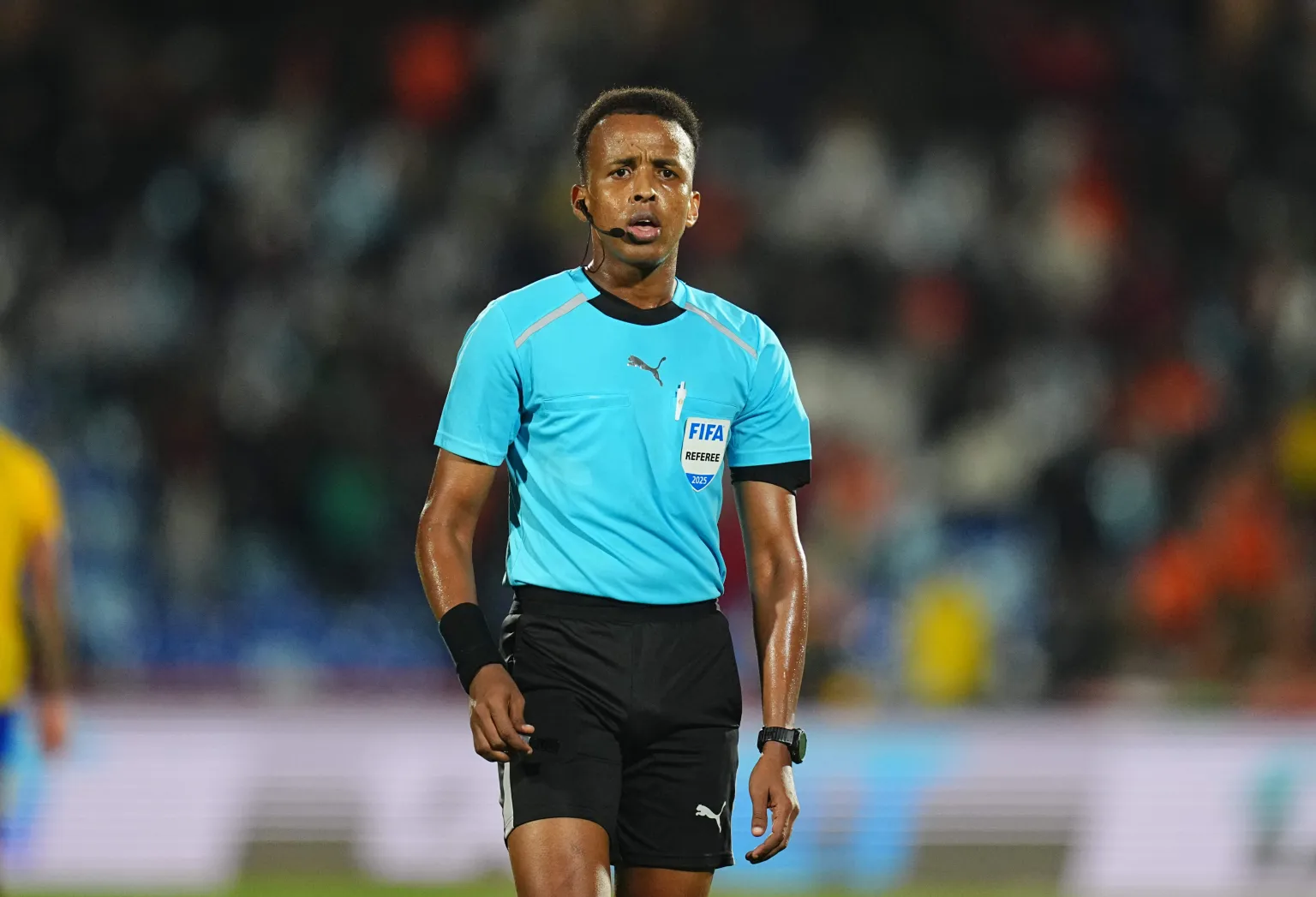
A storm of reactions has followed reports that celebrated Somali referee Omar Abdulkadir Artan, recently recognized as Africa’s best referee, has been denied entry into the United States despite being scheduled to perform official duties at the ongoing FIFA World Cup.
The development has generated concern across the football community, with many expressing disbelief that an internationally accredited match official selected for one of football’s biggest events could face immigration obstacles at such a crucial moment in his career. Artan, who has built a reputation as one of Africa’s most accomplished referees, was expected to play an important role during the tournament after earning global recognition for his performances on the continent and in international competitions.
According to reports, the Somali referee arrived in the United States in preparation for his World Cup assignments but was reportedly refused entry by immigration authorities. The circumstances surrounding the decision have triggered widespread debate, particularly given his status as a FIFA-appointed official. While details regarding the exact reasons behind the denial remain limited, the incident has raised questions about how immigration regulations can affect international sporting events that rely on the participation of athletes, coaches and officials from around the world...READ THE FULL ARTICLE HERE .
Artan’s rise within football officiating has been widely celebrated across Africa. Over the years, he has officiated numerous high-profile matches and earned praise for his professionalism, consistency and command of games. His recognition as Africa’s best referee was viewed as a significant achievement not only for him personally but also for Somali football, which has long sought greater representation on the global stage despite facing numerous developmental challenges.
Many football enthusiasts had hoped that his World Cup involvement would serve as an inspiration to young referees and aspiring sports professionals across Africa. His selection by FIFA was seen as evidence that talent and dedication could overcome barriers, making the news of his denied entry even more disappointing for supporters who viewed the tournament as another milestone in his remarkable career.
The incident has also renewed discussions about the challenges sometimes faced by citizens of certain countries when travelling internationally, even for official assignments. Critics argue that sporting competitions of global significance should ensure smooth access for accredited participants, particularly those invited by international governing bodies. Others have called for greater coordination between host nations and sporting organizations to prevent similar situations from occurring in the future.
Football administrators and observers have expressed hope that the matter can be resolved quickly so that Artan can participate in the tournament as originally planned. Many believe his absence would be a loss not only for African football but also for the World Cup itself, which prides itself on bringing together the best talent from every corner of the globe.
The situation has attracted attention beyond the football world, with commentators noting the symbolic importance of the case. For many Africans, Artan’s journey represents perseverance, excellence and the growing influence of African officials in international sports. As a result, any obstacle preventing him from carrying out his duties at the World Cup is being viewed with considerable concern.
While FIFA and relevant authorities are expected to continue discussions on the matter, supporters remain hopeful that a solution can be reached. The possibility of Africa’s top-ranked referee missing out on the opportunity to officiate at the biggest football tournament in the world has cast a shadow over what should have been a moment of pride and celebration.
For now, the football community awaits further clarification on the circumstances surrounding the decision and whether steps can be taken to allow Omar Abdulkadir Artan to resume his World Cup duties. Until then, a story that was meant to highlight African excellence on the global stage has instead become one of uncertainty, disappointment and growing calls for intervention.