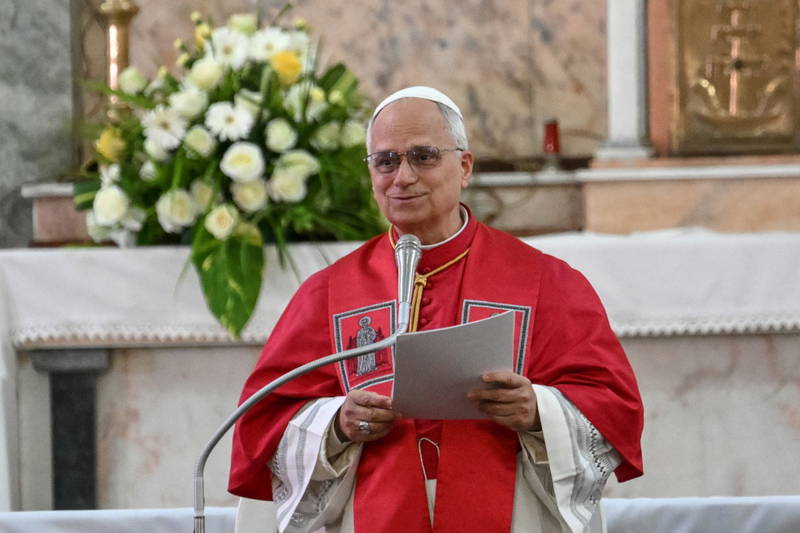
Pope Leo XIV has issued a historic and unprecedented apology for the Vatican’s role in legitimising slavery, acknowledging that the Catholic Church failed for centuries to clearly condemn the inhumane practice that devastated millions of lives across the world. The apology, which has sparked widespread global discussion, came through the Pope’s first major encyclical titled Magnifica Humanitas where he reflected on the painful legacy of slavery and the Church’s delayed response to one of history’s darkest injustices.
In the strongly worded document, Pope Leo XIV admitted that the Vatican and several church institutions were historically involved in regulating and legitimising forms of subjugation and enslavement, particularly during the colonial era when European powers expanded into Africa and other parts of the world. He described the Church’s failure to firmly oppose slavery much earlier as “a wound in Christian memory,” while openly asking for forgiveness on behalf of the Catholic Church.
The Pope acknowledged that previous church authorities allowed and defended systems that treated non-Christians as people who could be conquered and enslaved. Historical papal decrees issued centuries ago reportedly gave European rulers religious backing to invade territories and force people into slavery. Although earlier popes had condemned aspects of slavery and apologised for the actions of Christians involved in the slave trade, Pope Leo XIV’s statement is being viewed as the clearest admission yet of the Vatican’s institutional role in legitimising slavery. ..READ THE FULL ARTICLE HERE .
Beyond addressing historical slavery, the Pope also warned that modern society faces the danger of “new forms of slavery” linked to the digital economy and rapid technological advancement. He raised concerns over artificial intelligence, exploitation of workers and unethical systems driven by profit and power, stressing that humanity must avoid repeating the mistakes of the past in different forms. According to him, technological development must always respect human dignity and protect vulnerable people from exploitation.
The apology has generated reactions from religious leaders, historians, human rights advocates and descendants of enslaved communities across the globe. Many described the statement as a significant step toward historical truth and reconciliation, although some activists insist that more concrete actions, including deeper acknowledgment of colonial-era injustices and reparative efforts, may still be necessary.
Pope Leo XIV’s remarks are expected to remain a major moment in the history of the Catholic Church, especially as debates continue worldwide about historical accountability, racism, colonialism and social justice. His statement has also intensified conversations around the moral responsibilities of global institutions in confronting painful aspects of their past while shaping a more ethical future for generations to come.