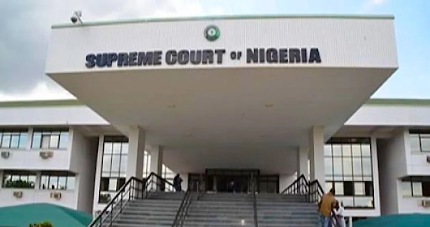
Nearly two years after the Supreme Court delivered its landmark judgment granting financial autonomy to Nigeria’s 774 local government councils, fresh findings have revealed that many state governments are still exercising control over council allocations, raising serious concerns about the implementation of one of the country’s most significant constitutional rulings.
An investigation by The PUNCH showed that local governments received a total of about ₦10.48 trillion in allocations from the Federation Account between July 2024 and June 2026. However, despite the huge disbursements, the funds have largely continued to pass through state-controlled Joint Local Government Accounts in many states instead of being paid directly into council accounts as ordered by the Supreme Court. (Punch Newspapers)
The apex court had ruled that allocations belonging to local governments should be paid directly to their respective accounts, declaring the continued withholding or spending of such funds by state governments unconstitutional. The judgment was widely celebrated as a breakthrough that would strengthen grassroots governance, improve accountability, and enable local councils to execute projects independently without political interference. (Punch Newspapers)..READ THE FULL ARTICLE HERE .
However, investigations across several states suggest that the anticipated financial independence has yet to become a reality. Officials from different local government councils disclosed that governors still determine how much money is eventually released to councils, while chairmen reportedly require approval from state governments before embarking on major projects. In some cases, council officials claimed that although large allocations appear on official records, only a fraction eventually reaches the local governments after various deductions and approvals. (Punch Newspapers)
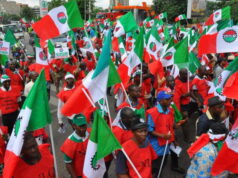
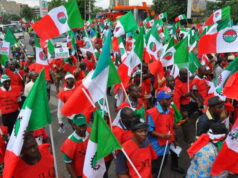
The National Union of Local Government Employees also expressed disappointment over the slow implementation of the judgment. The union stated that despite repeated appeals to the Federal Government, statutory allocations are yet to be transferred directly to local governments nationwide. According to the union, genuine financial autonomy cannot be said to exist until councils receive their allocations without passing through state governments. (Punch Newspapers)
The report further revealed varying levels of compliance across the country. While states such as Kaduna, Kano, Benue, Sokoto, Plateau, and Abia were reported to still be operating under the old joint account arrangement or similar structures, Jigawa emerged as one of the few states where local governments reportedly operate independent accounts and exercise greater financial control over their allocations. (Punch Newspapers)
Following the Supreme Court verdict, President Bola Tinubu directed relevant federal agencies to ensure full implementation of the judgment, leading to the establishment of an inter-ministerial committee tasked with developing procedures for direct payments and resolving legal and administrative challenges. Despite these efforts, progress has remained slow, leaving many stakeholders questioning why a binding judgment of Nigeria’s highest court has not been fully enforced. (Punch Newspapers)
The continuing controversy has reignited calls for urgent action to protect local government autonomy, with governance experts arguing that meaningful development at the grassroots cannot be achieved if councils remain financially dependent on state governments. As billions of naira continue to flow into the local government system every month, pressure is mounting on the Federal Government to ensure that the Supreme Court’s directive is fully implemented and that local councils finally gain the financial independence promised by the historic judgment.