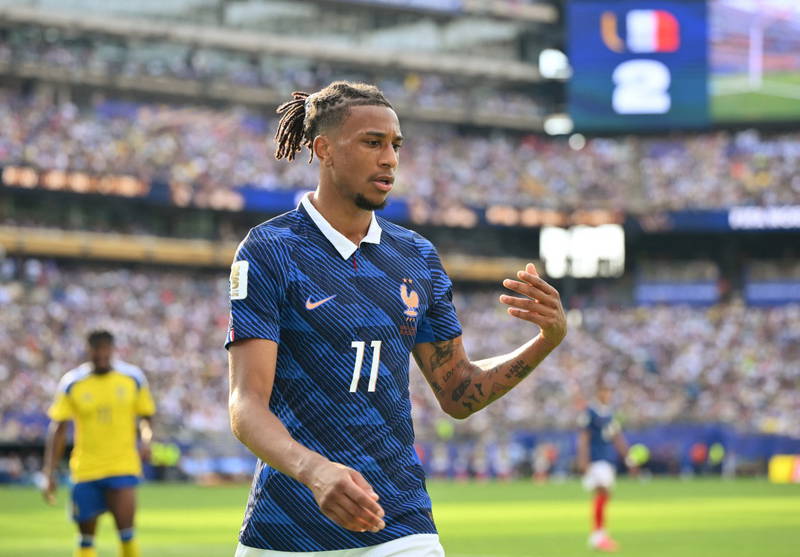
France has reportedly appealed to FIFA to overturn the yellow card shown to winger Michael Olise during their hard fought 1-0 victory over Paraguay in the Round of 16 of the 2026 FIFA World Cup, a move that comes in the wake of the governing body’s controversial decision to lift the suspension imposed on United States striker Folarin Balogun.
Olise was booked deep into stoppage time following an incident involving Paraguay midfielder Matías Galarza. French officials insist the Bayern Munich star made no contact with his opponent and argue that television replays clearly show the caution was unwarranted. The French Football Federation is now seeking to have the booking erased before France’s quarterfinal clash against Morocco, fearing that another yellow card would automatically rule Olise out of a potential semifinal. (Vanguard News)
The appeal has intensified debate over FIFA’s disciplinary decisions after the governing body recently suspended the automatic one match ban handed to United States forward Folarin Balogun following his red card in the knockout stage. That unprecedented decision drew widespread criticism from several football associations and observers, who argued it risked undermining consistency and fairness in the tournament. France now believes the Balogun ruling has created a precedent for reviewing other contentious disciplinary decisions...READ THE FULL ARTICLE HERE .
French officials maintain that Olise should not suffer the consequences of what they describe as an obvious refereeing error, especially at such a crucial stage of the competition. With yellow cards only being wiped after the quarterfinals, another caution against Morocco would see the talented winger miss the semifinals should France advance. (Vanguard News)
The latest appeal has added another layer of controversy to an already turbulent World Cup, with football fans and analysts closely watching FIFA’s next move. If the governing body agrees to France’s request, it could open the door for more national teams to challenge disciplinary decisions during major tournaments. If the appeal is rejected, however, questions are likely to persist over why Balogun’s case was treated differently, further fueling the ongoing debate about consistency, transparency, and fairness in football’s biggest competition.