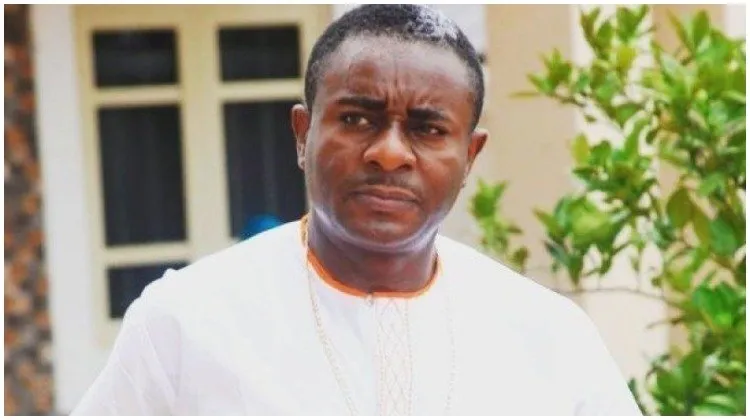
Veteran Nollywood actor and politician Emeka Ike has threatened to take legal action against Lere Olayinka, following a controversy surrounding the alleged exposure of his personal voter registration information from the database of the Independent National Electoral Commission. The development has sparked widespread debate about data privacy, electoral integrity and the security of sensitive information held by government institutions.
The controversy began after Olayinka, a media aide to the Minister of the Federal Capital Territory, Nyesom Wike, shared screenshots on social media showing details of Ike’s voter registration transfer from Imo State to the Federal Capital Territory. In the post, Olayinka questioned the actor’s political ambitions in Abuja, claiming that he had only recently transferred his voter registration to the FCT. The screenshots reportedly contained personal details including Ike’s application number, voter identification information, registration centre and other records that many observers believed originated from an administrative section of INEC’s voter registration platform.
Reacting during an appearance on a television programme, Ike condemned the action, describing it as a serious violation of privacy and a disturbing example of abuse of access to sensitive information. The actor expressed shock that a public official could allegedly obtain and publicly share information from what appeared to be a restricted electoral database. He argued that such conduct raises troubling questions about the protection of citizens’ personal data and the extent of access enjoyed by political actors within government circles. ..READ THE FULL ARTICLE HERE .
According to Ike, the incident goes beyond a personal attack and touches on broader concerns affecting all Nigerians. He maintained that no individual should have the power to retrieve and publicly display a citizen’s private information without authorization. The actor insisted that he was prepared to challenge the matter through appropriate legal channels, stating that such actions should not be allowed to continue unchecked.
The controversy has also drawn the attention of INEC, which has since announced the commencement of an investigation into the circumstances surrounding the release of the information. The electoral commission disclosed that preliminary findings from its audit trail had helped identify the user account through which the data was accessed. However, INEC stressed that there was no evidence of an external cyberattack or hacking of its systems. According to the commission, the information was allegedly accessed through valid credentials assigned to personnel involved in the ongoing voter registration exercise and was subsequently released without authorization.
INEC further reassured Nigerians that the incident did not indicate a compromise of its broader voter registration infrastructure or the personal records of more than 90 million registered voters across the country. The commission stated that it remains committed to protecting voter information and preserving public confidence in the electoral process. It also revealed that the Department of State Services has launched an independent investigation into the matter, with assurances that anyone found culpable would face appropriate sanctions.
The unfolding dispute has generated significant public interest, particularly as Nigeria moves closer to another election cycle. Beyond the personal disagreement between Ike and Olayinka, the incident has intensified discussions about digital privacy, accountability in public institutions and the need for stronger safeguards to prevent unauthorized access to sensitive electoral records. As investigations continue, many Nigerians are watching closely to see whether the controversy will lead to legal action, disciplinary measures or broader reforms aimed at strengthening data protection within the country’s electoral system.