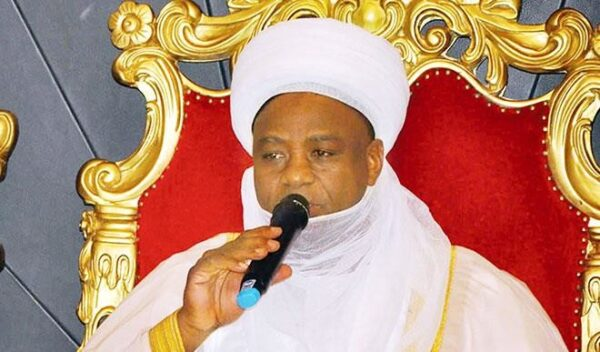
The Sultan of Sokoto, Muhammad Sa’ad Abubakar III, has strongly dismissed claims that Muslims are planning to wipe out Christians in Nigeria, urging citizens to stop attaching religion to criminality and insecurity in the country.
The respected traditional ruler made the remarks during the first triannual meeting of the Nigeria Inter-Religious Council held in Abuja, where religious and government leaders gathered to discuss growing concerns over insecurity, mistrust, and religious tension across the country.
Addressing participants at the event, the Sultan insisted that Muslims have no agenda to eliminate Christians in Nigeria, stressing that both religions must continue to coexist peacefully. He emphasized that Nigeria’s challenges should not be interpreted solely through a religious lens, warning that such narratives only deepen division and suspicion among citizens. ..READ THE FULL ARTICLE HERE .
According to him, criminal activities being carried out by terrorists, bandits, and kidnappers should not automatically be linked to Islam or any religion. The Sultan argued that many violent actors misuse religion to justify their actions even though their activities contradict the teachings of Islam. He urged Nigerians to focus on identifying criminals for what they are rather than labeling them based on religion.
The Sultan further stressed the importance of dialogue and mutual understanding, describing communication as the only sustainable path toward national unity and peaceful coexistence. He stated that members of different faiths must learn to trust and understand one another beyond mere tolerance if Nigeria hopes to overcome its growing social and security challenges.
His comments come amid increasing national and international debates over insecurity and religious violence in parts of Nigeria, especially in the North where attacks by insurgents, bandits, and armed groups have fueled tensions among communities. In recent months, several international organizations and advocacy groups have raised concerns about killings affecting both Christian and Muslim communities in different parts of the country.
Also speaking at the gathering was the President of the Christian Association of Nigeria, Archbishop Daniel Okoh, who emphasized the need for religious literacy and better understanding among Nigerians. He warned against reducing complex national problems to religious stereotypes, noting that many conflicts often described as religious are actually rooted in political, economic, and social factors.
The meeting also featured remarks from senior government officials including Secretary to the Government of the Federation, George Akume, who called for stronger cooperation between religious bodies and government institutions in promoting peace and national unity.
Observers say the Sultan’s comments are significant given the growing tensions surrounding insecurity, ethnic divisions, and accusations of religious marginalization in some parts of the country. Analysts believe the statement was aimed at calming fears, reducing mistrust, and reinforcing the message that criminal violence should not be generalized as a religious war.
The Sultan has consistently positioned himself as an advocate for interfaith dialogue and national unity, often working alongside Christian leaders through NIREC to promote peaceful coexistence between Muslims and Christians in Nigeria. His latest remarks are expected to spark fresh conversations about the role of religious leaders in addressing insecurity and preventing the spread of dangerous narratives capable of deepening national divisions.