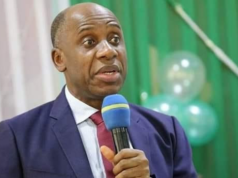
Fresh controversy has emerged in Nigeria’s political space as Babachir Lawal openly declared that Peter Obi was never truly committed to the African Democratic Congress, a statement that has reignited discussions around loyalty, strategy, and shifting alliances ahead of the 2027 general elections.
Babachir Lawal, a former Secretary to the Government of the Federation, made the remark while reacting to the recent political developments surrounding Obi and his association with the ADC. According to him, the former Anambra State governor’s involvement with the party lacked depth from the outset, suggesting that his political calculations were always directed elsewhere rather than being firmly rooted within the ADC structure.
Lawal’s comments come at a time when Nigeria’s opposition landscape is experiencing significant realignments, with defections, coalition talks, and emerging alliances reshaping the political terrain. He argued that Obi’s body language and strategic moves over time indicated that his engagement with the ADC was more of a temporary alignment rather than a long term commitment...READ THE FULL ARTICLE HERE .
The statement has generated mixed reactions among political observers and supporters, with some agreeing that recent events appear to support Lawal’s claims, while others view the comments as politically motivated and dismissive of Obi’s influence and support base across the country.
Supporters of Obi have maintained that political alliances are often fluid and driven by evolving realities, insisting that strategic repositioning should not be mistaken for lack of commitment. They argue that in a dynamic political environment, leaders must adapt to circumstances in order to remain relevant and effective.
Analysts note that Lawal’s remarks highlight a recurring challenge in Nigerian politics, where party loyalty is frequently overshadowed by shifting alliances and strategic calculations. This trend, they say, has contributed to a political culture where defections and realignments are common, especially as election cycles approach.
The comments also underscore growing tensions within opposition circles, particularly as different camps attempt to consolidate influence and define the direction of coalition politics ahead of 2027. With multiple political actors seeking to position themselves for future contests, statements like this are likely to shape public perception and influence ongoing negotiations.
Beyond the immediate controversy, the development reflects the broader uncertainty within Nigeria’s political system, where alliances are constantly evolving and long term commitments are often difficult to sustain. It also raises questions about the stability of political parties and their ability to maintain cohesion in the face of competing ambitions.
As the political atmosphere continues to heat up, Lawal’s assertion adds another layer to the unfolding narrative around Obi and the ADC, reinforcing the idea that the road to 2027 will be marked by intense competition, strategic maneuvering, and ongoing debate over credibility and commitment within Nigeria’s opposition movement.